
| 일 | 월 | 화 | 수 | 목 | 금 | 토 |
|---|---|---|---|---|---|---|
| 1 | 2 | 3 | 4 | 5 | ||
| 6 | 7 | 8 | 9 | 10 | 11 | 12 |
| 13 | 14 | 15 | 16 | 17 | 18 | 19 |
| 20 | 21 | 22 | 23 | 24 | 25 | 26 |
| 27 | 28 | 29 | 30 |
- 이쿠하라쿠니히코
- 스파이패밀리
- 편성표
- 귀멸의칼날
- 돌아가는펭귄드럼
- 10월애니신작
- 디즈니
- 추석특선영화
- 영화
- 애니메이션
- 도는펭귄드럼
- 디즈니플러스
- 생존전략
- 영화리뷰
- 10월신작애니
- 돌아가는 펭귄드럼
- 추석특선프로그램
- 설날특집
- 애니
- 4월신작애니
- 추석편성표
- 4월애니신작
- 신작애니
- 애니신작
- 주술회전
- 추석
- 설날특선영화
- 설날
- 추석영화
- 최애의아이
- Today
- Total
Hongdang's Workstation
Puella Magi Madoka Magica The Movie: Walpurgisnacht Rising (2026) – "A Tale of Deceit": Let the Song Resound High into the Sky, Beyond Eternity 본문
Puella Magi Madoka Magica The Movie: Walpurgisnacht Rising (2026) – "A Tale of Deceit": Let the Song Resound High into the Sky, Beyond Eternity
홍당 2026. 9. 12. 00:00| 한국어(Origin) | 日本語 | English |
※ Please note that this text is an English translation and refinement of the original critique written in Korean. We kindly ask for your understanding that minor nuances or contextual expressions may vary slightly in the process of translation.
※ The Korean (Origin) version is an immersive, snackable-reading edition packed with trendy internet memes and recommended BGM hyperlinks for each section. Give your ears a treat while you read!
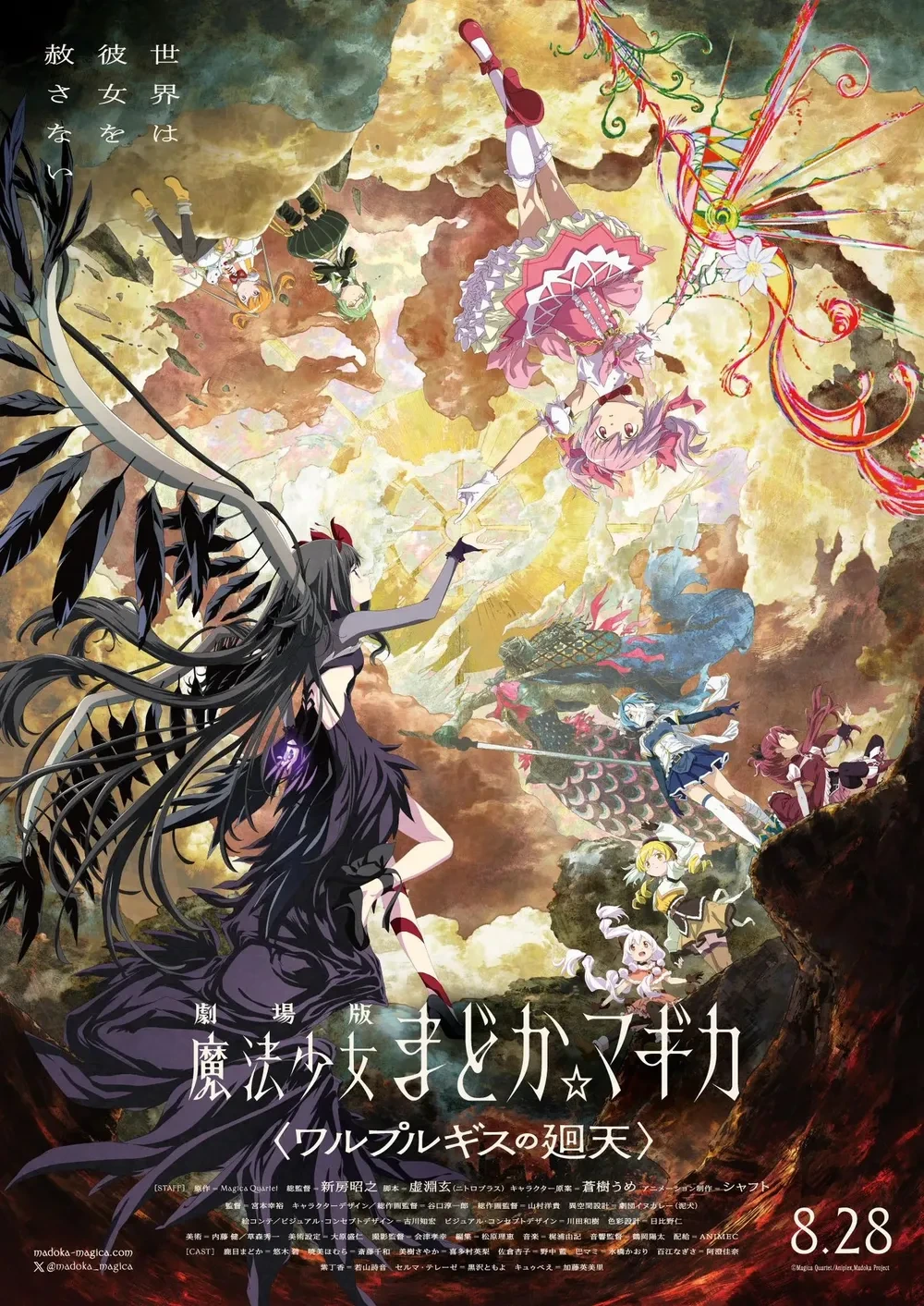
Following the shocking ending of The Rebellion Story, the void we had to face was by no means short. Amidst countless speculations and crisis theories, Puella Magi Madoka Magica the Movie: Walpurgisnacht Rising has finally unveiled itself.
This article is not a rigid analysis tearing into the plot holes of a complex, intertwined universe. Rather, it is an intuitive review tracing the psychological narratives of the characters within this "world of lies" woven by Madoka, Homura, and the magical girls before them exploring the sheer depth of expertise the production team has built up over these long years of waiting. Setting aside head-scratching lore debates for a moment, we peer behind the curtains of this bizarre comedy that will echo into eternity.
※ Note: I cross-referenced the pamphlet book purchased at the local theater, but it did not contain any core plot details or clear explanations. Since official materials like the upcoming official guidebook are yet to be released, please keep in mind that the following contents are strictly my subjective interpretation.
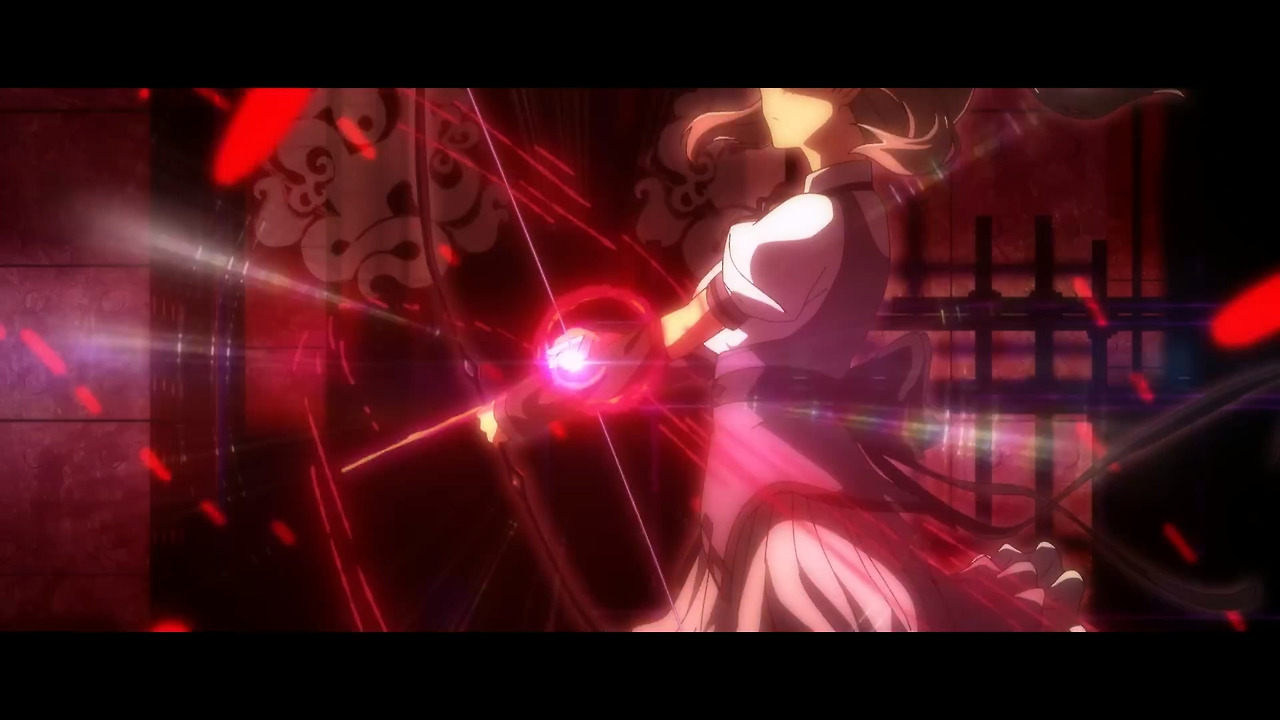
The Hiatus After Rebellion – A Walpurgisnacht Born of Silence and Longing
The core creative team of Puella Magi Madoka Magica the Movie: Walpurgisnacht Rising kept themselves busy in their respective fields even after the release of The Rebellion Story back in 2013. Although the franchise itself entered a long period of silence, screenwriter Gen Urobuchi and the animation team Gekidan Inu Curry continuously stockpiled plot concepts, visual artworks, and lore materials for the next chapter of this universe.
The real hurdle, however, was the corporate strategy of the IP holder, Aniplex. The decade-long gap before this sequel cannot be dismissed as mere "adult circumstances" or a simple lack of decisiveness. Beyond Madoka Magica, Aniplex holds a powerful roster of mega franchises, including Sword Art Online, the Fate series, Bleach, Bocchi the Rock!, and Demon Slayer: Kimetsu no Yaiba. Blessed with plenty of time and financial leeway, they were determined not to recklessly exploit or cheapen the mainline Madoka Magica IP.
Instead, they expanded the franchise through mobile games like Magia Record, but this was never enough to quench the thirst of fans who craved the deep, compelling narrative of the original universe. Throughout this hiatus of over ten years, an overwhelming sense of anxiety loomed over the fandom—a fear that the franchise had missed the peak of its peak hype.
The relentless string of delays—shifting from [Winter 2024 ➔ Winter 2025 ➔ February 2026 ➔ August 28, 2026]—only added fuel to the fans' burning impatience. Of course, Aniplex must have been just as anxious, given the massive capital they poured into promotions. This agonizing wait mirrors the strange sense of emptiness felt in this film due to the omission of the opening track by ClariS, a staple of the series. Yet, the reason Aniplex remained patient and pushed through multiple delays is because they placed tremendous faith in the franchise's raw potential—even going as far as to secure a prime Sunday 5:00 PM slot on Japanese broadcast television to air the TVA compilation movies, Beginnings and Eternal.
The Puella Magi Madoka Magica series unpacks grand and complex concepts, such as cosmic entropy, systemic structures, hope versus despair, and the clash between the Law of Cycles and the Devil. However, forcing oneself to mechanically piece these settings together can inadvertently hinder the core essence of the experience: understanding the central theme through the characters' journeys. Instead, the clearest and most rewarding shortcut to enjoying the series is to trace the twisted inner minds and psychological narratives of the core characters, paying close attention to how the props and dialogue manifest the ultimate theme. If we embrace this ensemble drama of magical girls where individual obsessions and emotions collide—not as a rigid prison of massive lore, but as a bizarre comedy, the work transforms into a much more exhilarating piece of entertainment.
In the realm of arts and culture, retracing the creators' footsteps is a vital feedback process that elevates narrative comprehension and execution to their absolute limits, benefiting both the audience and the creators themselves. While integrating successful elements from other hits or learning from the failures of overhyped projects is important, that is merely the baseline. Much like ungi josik (the meditative healing and cultivation of inner energy) in martial arts fiction, the most profound "martial arts training" in plotting is the process of breaking down, analyzing, and deeply reassembling the elements of success from one's own original creations. Walpurgisnacht Rising is the very fruit of that fierce reassembly.
For the fans who have eagerly counted down the days, this long wait was by no means in vain. Having traveled directly to Osaka to watch the film in a Japanese theater, I found my expectations completely fulfilled. By effortlessly shattering the box office records set by its predecessor, The Rebellion Story, this masterpiece has once again proven to the world that the sheer cultural impact and power of the Madoka Magica IP remain absolutely unmatched.
This review is the ultimate culmination of the creators' passion and dedication accumulated over more than a decade. Because the film itself possesses a highly avant-garde nature, I found it essential to frequently cite the direction and texts of numerous other masterpieces throughout this text. While refining this piece, I debated heavily on trimming down these extensive references, yet I ultimately chose to keep them. The reason is simple: without relying on these precise narrative milestones, I did not possess the confidence to convey the grand themes and complex subtexts of Walpurgisnacht Rising in a way that would truly resonate with your hearts.
Please do not feel overwhelmed or burdened even if some of the cited works or subcultural references throughout this critique feel unfamiliar or obscure. I merely hope you read this with a light and open heart, recognizing it as a passionate perspective from an old fan who has fiercely loved the world of Madoka Magica at the culmination of this grand 15-year nexus, thinking, "Ah, such a deep layer of interpretation can also exist." That alone would bring me the greatest joy.
※ WARNING: Beyond this point, this review contains major spoilers regarding the core plot of the film.
This is a "Story of Falsehood"—a grand triumph of human will where a devil shattered a world of cruel lies and twisted worship,
willingly bearing the saint’s cross to restore the smile of her most cherished one.
The Swaying Silver Garden – Profane Intruders in the Traitor’s World
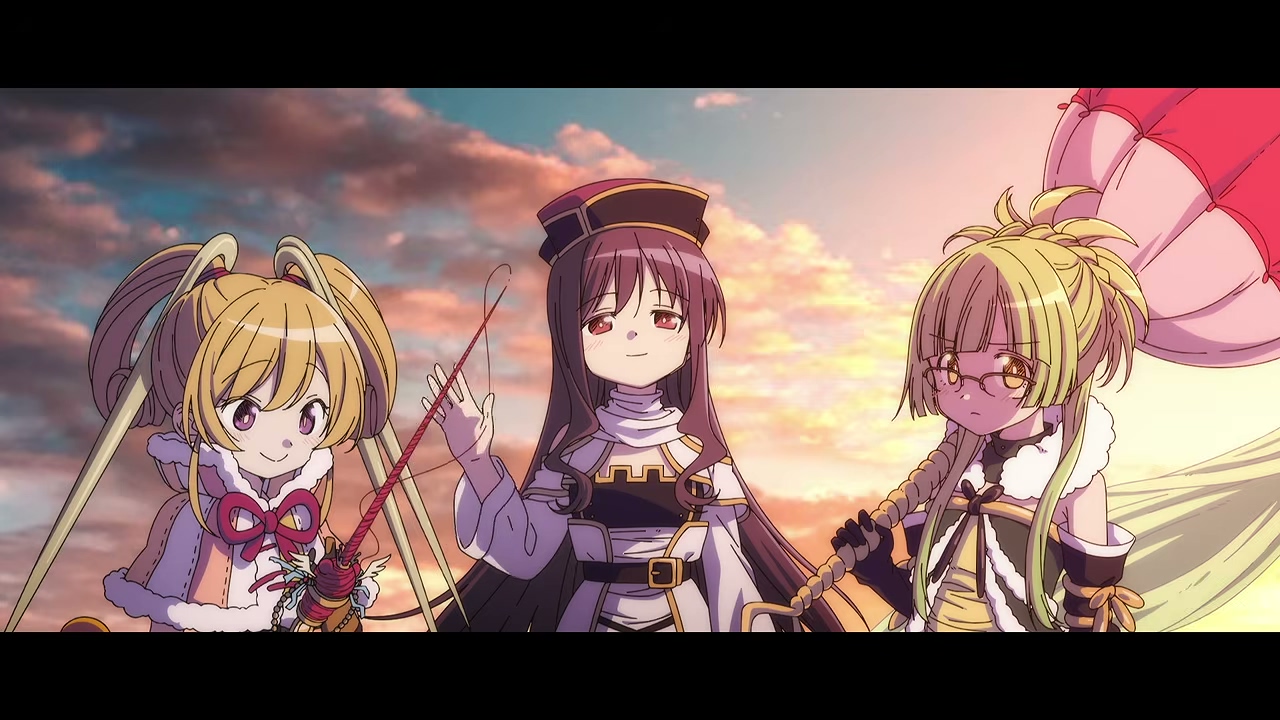
The moment the movie begins, the screen is filled with a bizarre "Demon Lizard Game." Out of nowhere, we are shown a spectacle where ordinary girls transform into magical girls and flamboyantly exterminate grotesquely shaped magical beasts. This implicitly hints at the "efficient system of salvation" proposed by Homura—a system where girls borrow fragments of the Devil's power as a displacement outlet to relieve their anxieties. Existing magical girls like Mami Tomoe and Kyoko Sakura feel a sense of dissonance and danger regarding the fact that ordinary civilians are participating in the extermination of magical beasts, and they remain on high alert. However, it initially appeared to be an ideal, win-win ecosystem where civilian consumers and "full-time" magical girls effortlessly shared the burden of the magical beast problem to achieve their respective goals (stress relief and securing an ample inventory of cubes).
Yet, this world of perfect harmony established by Homura begins to fracture with the arrival of a mysterious girl named "Was" (whose official name was confirmed in the pamphlet) and her companions, "Shi Choka" and "Selma Therese." They pierced through the gaps in Homura's barrier management system a void left by Madoka's surveillance. Utilizing what is essentially a "backdoor" tactic, they successfully dropped anchor right in the middle of the Devil's nest.
Their appearance is a de facto declaration of war against Demon Homura, who usurped the overseer of the Law of Cycles and restructured the universe. Yet, they are not mere adversaries of the devil or mechanical agents of the system. Rather, the process of unraveling the secrets behind the hidden circumstances and personal histories they each harbor as fellow magical girls forms the core narrative arc driving Walpurgisnacht: Rising.
While the "ribbon-tied window" at the tail end of the previous film The Rebellion Story symbolized control and confinement, the "doors" brought by Was and her group imply that the perfectly closed barrier established by Homura has finally collapsed. As ordinary schoolgirls participating in the "Demon Lizard Game" collapse, the mise-en-scène of "Demon Lizard Telephones" grotesquely packing the entire space—as if surrounding Madoka on her way home—visually demonstrates that the systems Homura deployed everywhere have been neutralized. This, too, serves as an overwhelming display of power hurled at Demon Homura by the intruders.
Akemi Homura hastily investigates the enemies' intentions and goals, but until the midpoint of the film, she makes little progress beyond confirming that "they are not from around Mitakihara." In fact, she even displays a careless complacency, believing that no one can pose a threat within the world she created. This mirrors her past actions: in the TVA epilogue, she casually talked about the principles and identity of the Law of Cycles, giving Kyubey a pretext for a new plan (excluding the behind-the-scenes machinations depicted in the manga version); and in The Rebellion Story, she allowed her judgment to be clouded by blind hatred regarding the witch's true identity. Once again, Homura repeats her characteristic "blind-spot arrogance."
Of course, she brings Sayaka Miki along as a countermeasure, but ultimately, Sayaka fails to serve as a meaningful asset. She is reduced to a mere "backdrop" bystander whose sole purpose is to explain the ongoing situation to the audience. Decisively, Homura underestimates Was’s ability to seize control of the territory and attempts a "fake duel" bluff to turn the tables, but even this is seen right through. In the end, the intruders' den and Was’s barrier, "Nazuka Sokotsune (名塚底根)," is fully exposed, and the true intentions and hopes harbored by each of these visitors slowly begin to materialize on screen.
To the Beginning – Clear and Serene Water Reflected by Lilacs and Cherry Blossoms
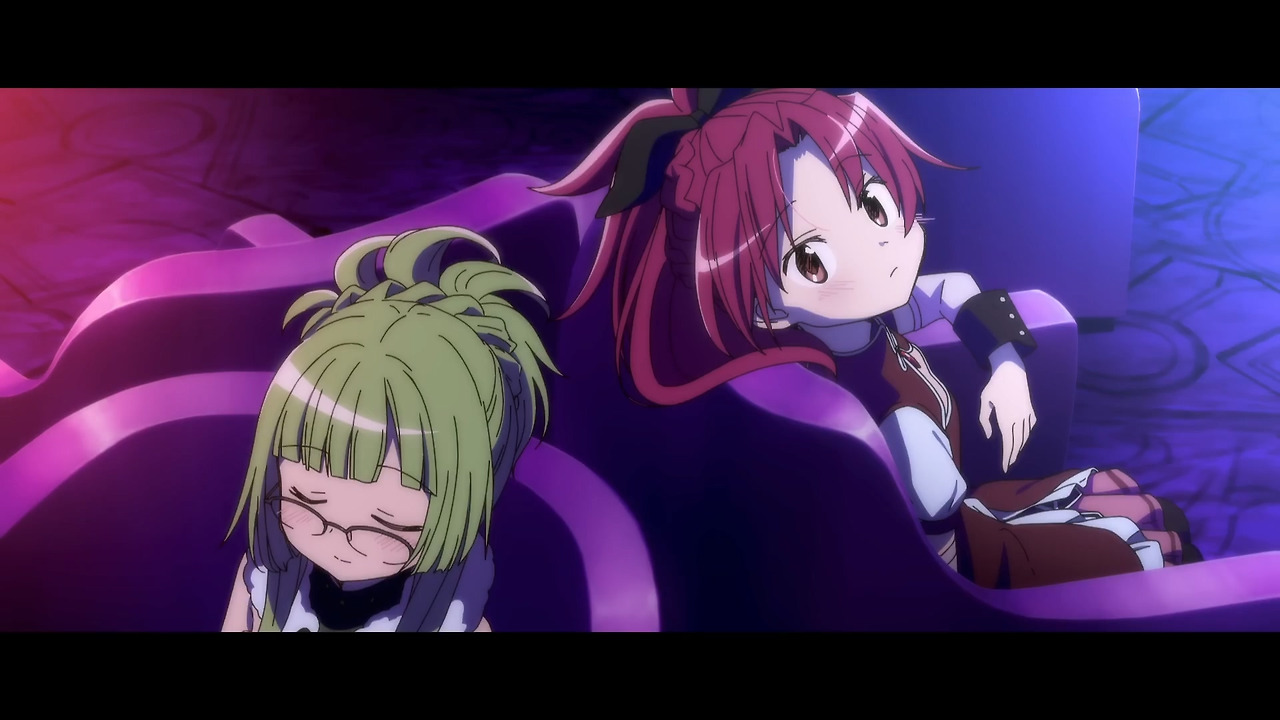
First of all, the newly introduced character, "Shi Choka (紫丁香)," is a Hong Kong-descended magical girl, as her name suggests. Her name translates to "Lilac," which carries the flower language of "first love." This holds immense significance outside the narrative framework of the work itself. It serves as the ultimate tribute from screenwriter Gen Urobuchi—a long-time devout fan of the genre—to "Hong Kong Noir" and "Chinese-style martial arts universes," which are the very artistic origins of his creative career. This is further supported by the production choices: the slum scenery reminiscent of Kowloon Walled City set against a black-and-white chromakey background, the puppet theater style flashback sequence that pays homage to his Thunderbolt Fantasy series, and the design of the high-altitude temple that serves as the stage for her duel with Kyoko.
Although she wears glasses—a prop that symbolizes the Akemi Homura of the original TV series and possesses an isolated personality, her core is much like Kyoko Sakura: easily swayed by relationships with others, harboring a fragile inner self that "hates being alone." She appears tough on the outside but is incredibly vulnerable within—essentially a character reassembled through the intersection of 30% Homura and 70% Kyoko. Having grown up in a destitute slum witnessing starvation and her father’s ruin, Choka possesses a narrative structure that precisely mirrors Kyoko Sakura’s past. By indirectly twisting or flipping Kyoko's survivalist trait of always eating and warning others "not to waste food" into an anti-plot format, the film accentuates the tragic nature of a bottom-of-the-barrel life with even more brutal intensity.
While Akemi Homura is often mentioned as a character capable of deeply understanding the life fluctuations of such a "Kyoko-type person," their relationship throughout the series has mostly remained a strictly business partnership focused on stopping Walpurgisnacht or exploring witches' barriers. Given that Kyoko has had few opportunities to drive the overarching narrative across the franchise, screenwriter Gen Urobuchi has essentially assigned her the perfect counterpart to prove her true essence: a magical girl who, despite her rough words, is ultimately good-natured and warm at heart.
Unlike the tragedy of Episode 9 in the original TV series—where Kyoko had to sacrifice her own life to take down the witched Sayaka—this battle assumes a similar structural framing, forcing Kyoko to fight and protect Madoka against Choka’s witch form, Paola, who takes the shape of sea creature imagery. However, this time, the film completely bypasses the complacent trope of assigning Madoka the role of making hollow, idealistic pleas. Instead, relying strictly on her own seasoned approach as a veteran magical girl, Kyoko showcases an even more refined and polished combat style to confront Choka head-on.
In doing so, Kyoko—who had been unable to resolve the deep-seated regrets of her past—finally fulfills her own sense of salvation and emotional closure. Through a fierce, explosive collision, two girls carrying identical yet distinct wounds come face-to-face and achieve a hard-won, genuine redemption born of mutual understanding. This narrative serves as Gen Urobuchi's beautiful tribute and a sublime act of emotional catharsis for Kyoko Sakura and Shi Choka—two magical girls who, much like The Old Man and the Sea, have fought lonely battles against a harsh destiny. It hands them a story of ungi-josik and "Clear and Serene Water" that washes away all lingering obsessions and grief.
FAITH: The Unholy HEXAGRAM – Those Who Practice Faith and Those Who Abandon It
(※ Note: The title of this section is inspired by the parallel concepts between the occult systems of the indie horror game "FAITH"—which deals with flawed blind faith and exorcism metaphors and the "Unholy Hexagram" system established by Selma in the film.)
"Selma Therese," who commands the grand scale stages of this theatrical release, implicitly displays a profound hatred and inferiority complex toward Madoka Kaname. Watching the narrative trajectory where Madoka—who remained completely powerless and helpless until Episode 9 of the original TV series—suddenly skyrocketed in significance starting from Episode 10 and ultimately transformed into the overwhelming embodiment of cosmic hope, Selma expresses a sense of "heretical skepticism."
While she worships Kyubey’s doctrine of managing cosmic energy, the moment she is confronted with the overwhelming scale of the "Law of Cycles"—the bizarre collaborative system proposed by Madoka her inferiority complex explodes over her own absurd predicament. Though her core conviction to save the world is identical to Madoka Kaname's, the decisive divergence lies in their targets: Selma desires the salvation of the "universe" (Kyubey's system), whereas Madoka desires the salvation of "witches" (the souls of magical girls). This mirrors the structural conflict of Mobile Suit Gundam: Char's Counterattack, which is widely regarded as the definitive climax of the Gundam narrative. Char treats the extreme violence of dropping Axis as a milestone to resolve his inner anguish, clashing with Amuro—his former rival and comrade. Both men harbored fractured affection and obsession toward Lalah Sune, the absolute figure of salvation who left an eternal scar on their souls. Their catastrophic collision ultimately concludes with the self-deprecating realization that "similar people end up hating each other." This character cliché of the "mirror theory," where two contrasting figures collide over a single focal existence like Lalah, is obsessively varied and applied throughout Walpurgisnacht Rising, much like the aforementioned narrative between Choka and Kyoko.
In contrast to Selma, who is thoroughly consumed by her inferiority complex, Nagisa Momoe appears to remain an innocent child who simply loves cheese yet she is a magical girl who understands the true essence of the narrative more accurately than anyone else. Even when invited to an amusement park built by Selma, which is filled with cruel, mock-lynching attractions, Nagisa is neither intimidated nor repulsed. Instead, she reads the room perfectly, plays along with the entertainment Selma provides, and demonstrates a deep capacity for acceptance by being the first to reach out and offer friendship.
This brilliance becomes especially prominent in a scene where she refrains from showing a volatile, heavy reaction to the brutal abuse inflicted upon a teddy bear dressed in Madoka's magical girl outfit. This serves as proof that Nagisa already coldbloodedly understands the negative flip side of the Law of Cycles—the fact that it inherently entails the death (extinction) of magical girls. Even to Selma, whose values are so drastically polarized from her own, Nagisa tries to propose a relationship of genuine salvation rooted in peace and happiness. Selma, however, is a "witch" possessed by a warped set of values, firmly believing that the "proof of power" is the only true form of hope . Inversely, this reflects an all-too-human, poignant existential despair—the heartbreaking fear of being entirely discarded by the cosmic system if one fails to constantly prove their utility
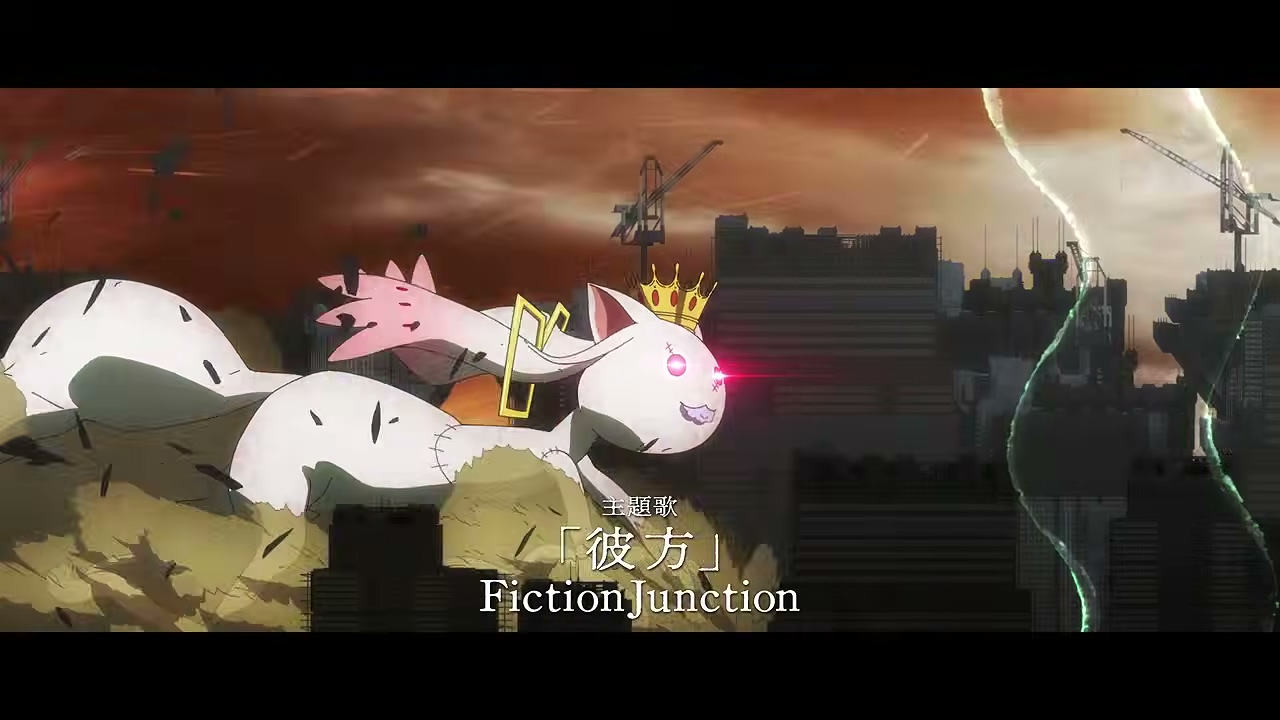
Exploiting Choka’s rebellion, she kidnaps Madoka and forces her into a mock "Kriemhild Gretchen" that she constructed herself. Going a step further, she creates a beast shaped puppet mount wearing a crown to represent Kyubey, flaunting her unrequited, obsessive infatuation toward it. Witnessing Selma's blind devotion, Nagisa is ultimately pushed to absolute disappointment. Alongside Mami Tomoe—who had already completed her spiritual and mental growth back in The Rebellion Story—Nagisa leads a brilliantly flamboyant "Confectionery Battleship" and advances without hesitation to dismantle Selma's distorted version of hope. In the end, Nagisa delivers a brutal yet definitive judgment, shattering Selma's Soul Gem with a "knife made of cheese."
This twisted philosophy of worship embraced by Selma directly homages the game system of Puella Magi Madoka Magica: The Battle Pentagram, a PS Vita title released over a decade ago. By expanding the original cooperative pentagram system into six points, the film stages a sequence where Madoka is subjected to a mock witch burning ceremony (the mock Kriemhild Gretchen) beneath an Unholy Hexagram. This act is both Selma's unilateral curse directed at Madoka and the ultimate trigger for the final showdown, hinting that none can escape the tragic destiny of a magical girl. Concurrently, this narrative device serves to proudly validate Nagisa Momoe—who was largely treated as a mere fan-service character in the previous film—as a core, fully recognized member of Madoka’s circle, the "Holy Quintet + 1." It stands as a mischievous yet deeply respectful nod from the creators, wickedly twisting established lore to strangely satisfy the highest expectations of long-time fans.
Furthermore, the narrative of Selma’s inferiority complex closely mirrors the characterization of "Porky Minch" from Nintendo’s RPG EarthBound (MOTHER 2), who foolishly deluded himself into believing he could control Giygas, the embodiment of chaos and destruction itself. For this reason, Selma could never truly be the final boss of Walpurgisnacht Rising. Instead, she is a perfect fit for the role of a foolish witch who remains utterly oblivious to the "terror of the lonely throne" held by the story's true final antagonist an ignorant entity who fails to respect Madoka's choices while grotesquely mimicking Ultimate Madoka’s attire.
Moreover, Selma’s passionate, unrequited love is rendered completely meaningless when the bizarre lore of "Quitterie"—the hidden boss witch from the PSP game Puella Magi Madoka Magica Portable—makes its screen debut in the main continuity. What Kyubey truly desired was never her affection, but rather "Nazuka Sokotsune" the verified codec data of the witch program. Having successfully seized this, Kyubey leaves the universe formed at the end of Walpurgisnacht Rising without a shred of lingering regret, remaining as a quiet, cunning victor. In the end, a cold chain of cause and effect draws a perfect curtain on Selma, ensuring that her profane and distorted version of salvation can never come to fruition.
The Nameless Monster – A Storm Brewed by the Forgotten
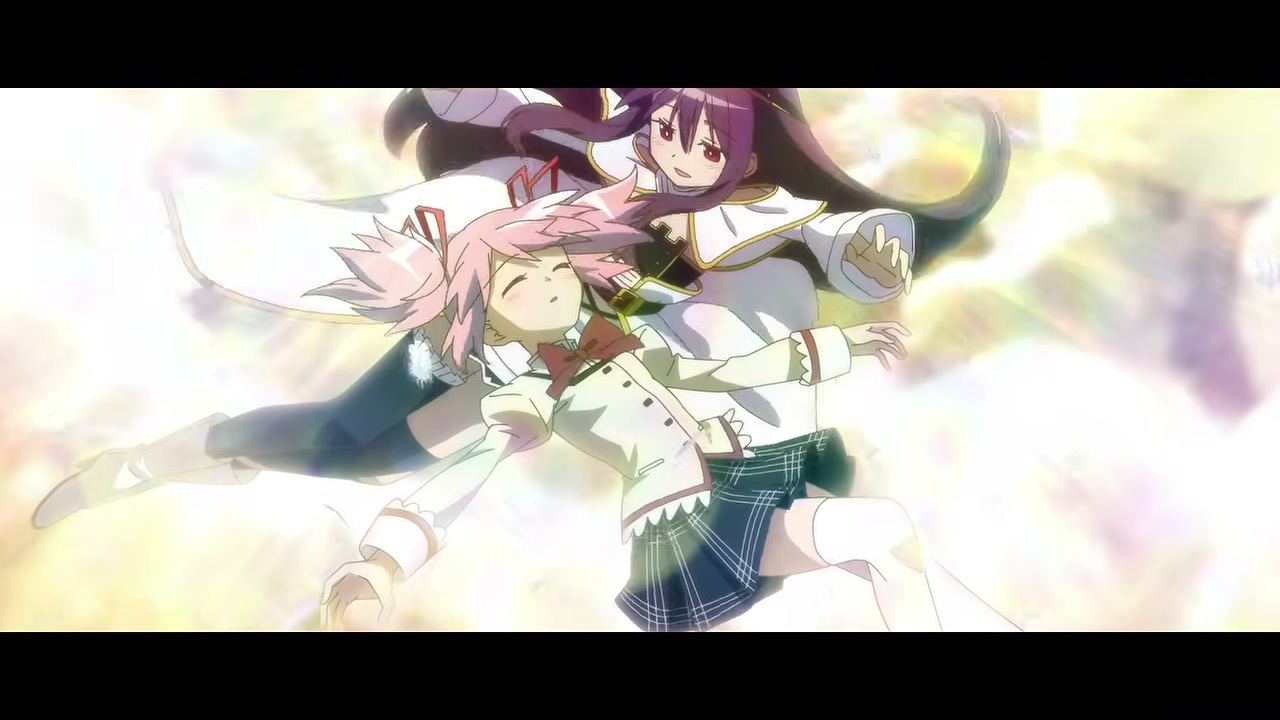
Was’s existence is barely even mentioned by name on the official website or within the dialogue of the film. She adheres to a strict mystique, being thoroughly excluded even from character introductions. The true identity of this girl, Was, is none other than "Walpurgisnacht." Just as the name Kyubey can be broken down and reassembled from its etymological root "inQuBetor," dismantling and rearranging the letters of WAS unveils the underlying truth (WAlpurgiSnacht). It is precisely for this reason that the production team kept her very name a tightly guarded secret. This treatment, akin to damnatio memoriae (condemnation of memory) both inside and outside the work, makes the tragedy of Was’s real name, "Marguerite," resonate with the audience in the most intuitive way possible. This also holds highly critical significance for the ending, which will be discussed later.
Marguerite, who was once an ordinary child with a French name, was a magical girl who endured the tragic era of the Black Death—as evidenced by her plague doctor mask prop. Sharing the same historical timeline as the spin-off series Tart Magica, this backdrop serves as a refined nod of respect from the creators to the franchise's expanded universe. Remarkably, her life precisely mirrors the trajectory of Madoka Kaname. In the face of a perilous crisis where she almost lost her life to magical beasts, she was saved by magical girls and became their comrade; furthermore, she eventually stepped up to become a savior herself, ascending after attempting to restructure the causality of the universe. However, arriving in the modern era, she has paradoxically transformed into a relic of the past and a target for extermination known as "Walpurgisnacht"—holding the position of a sort of "pioneer savior."
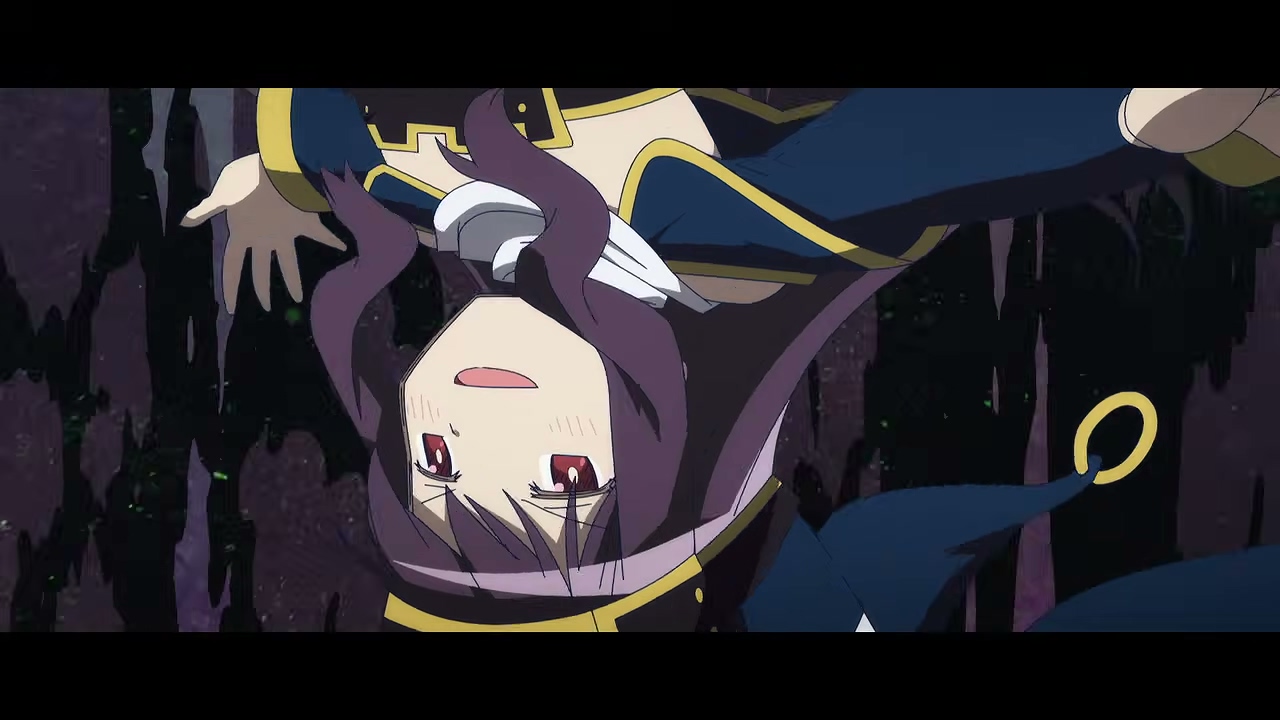
This downfall and distortion of a savior deeply evokes Revolutionary Girl Utena, one of the monumental stylistic and narrative origins of the Madoka Magica series. It directly aligns with the structural framing of Utena’s Prince, which initiated as a noble system to save the world but ultimately degenerated into a warped, twisted form due to centuries of structural overload. The "Rose Duels" in Utena, which wagered the distorted desires of the Duelists, seamlessly link to a profound homage in Madoka Magica the endless, desperate struggles that magical girls wage toward a salvation that offers no true rescue. Facing the desperate cries of magical girls who wished never to be forgotten amidst this endless cycle, Marguerite executed her salvation as her most resolute wish: a "proof of existence" (Memento mori). However, contrary to her pure intentions, her salvation morphed into a devastating "storm of gears" (Progear) that inflicts fatal harm upon upcoming magical girls, living hope, and life itself, collapsing into a harsh tragedy.
Entrapped in this endless vortex of self-loathing, Marguerite craved the existence of Madoka Kaname—the one entity who could grant them genuine rest more than anyone else. For this reason, she forged a massive, inescapable causality, ensuring her appearance in every single timeline where Madoka exists, crying out desperately for her own salvation. The ultimate conclusion of peace, achieved when Madoka finally calls her by her true name, flawlessly replicates the narrative resolution of Goethe’s classic literature Faust, where the protagonist Faust finds salvation through the sublime love of Gretchen. During the long hiatus following the past TVA broadcast postponement, I once ran a personal blog where I formulated a similar hypothesis. Back then, the target of salvation I envisioned was Akemi Homura rather than Marguerite; yet, witnessing this classic narrative of redemption completed in such an awe-inspiring and breathtaking manner fills me with a deeply unique and profound emotion.
The depiction of Marguerite pulling Homura and Madoka’s lips is by no means a superficial, fetishistic choice meant to generate character memes. Rather, it is a visual foreshadowing that demonstrates her immense age, seniority, and sheer weight as a witch. Hidden within this choice is a deliberate narrative device and a meta textual "voice actor joke" that aligns with the career of Maaya Sakamoto, who was cast as Marguerite. As a veteran who began her child acting career at the tender age of eight, she boasts an overwhelmingly prestigious trajectory. Crucially, in another one of Gen Urobuchi's mega-hits, PSYCHO-PASS, the brutal criminal "Rikako Oryo"—who stuffed and displayed young girls to flaunt her own artistic prestige—was also one of Maaya Sakamoto's most iconic roles.
This casting board appears to be yet another result of screenwriter Urobuchi’s mischievous yet intentional respect. What is even more spine-chilling is the fact that during the broadcast of the PSYCHO-PASS Extended Edition, the episodes featuring Rikako Oryo were completely pulled from television due to the aftermath of a real-world violent crime—effectively subjecting the character to a literal damnatio memoriae (condemnation of memory) in reality. The way this tragic, real-life incident weirdly overlaps with the narrative themes of the character makes this an absolute stroke of casting genius, piercing through a bizarrely layered irony.
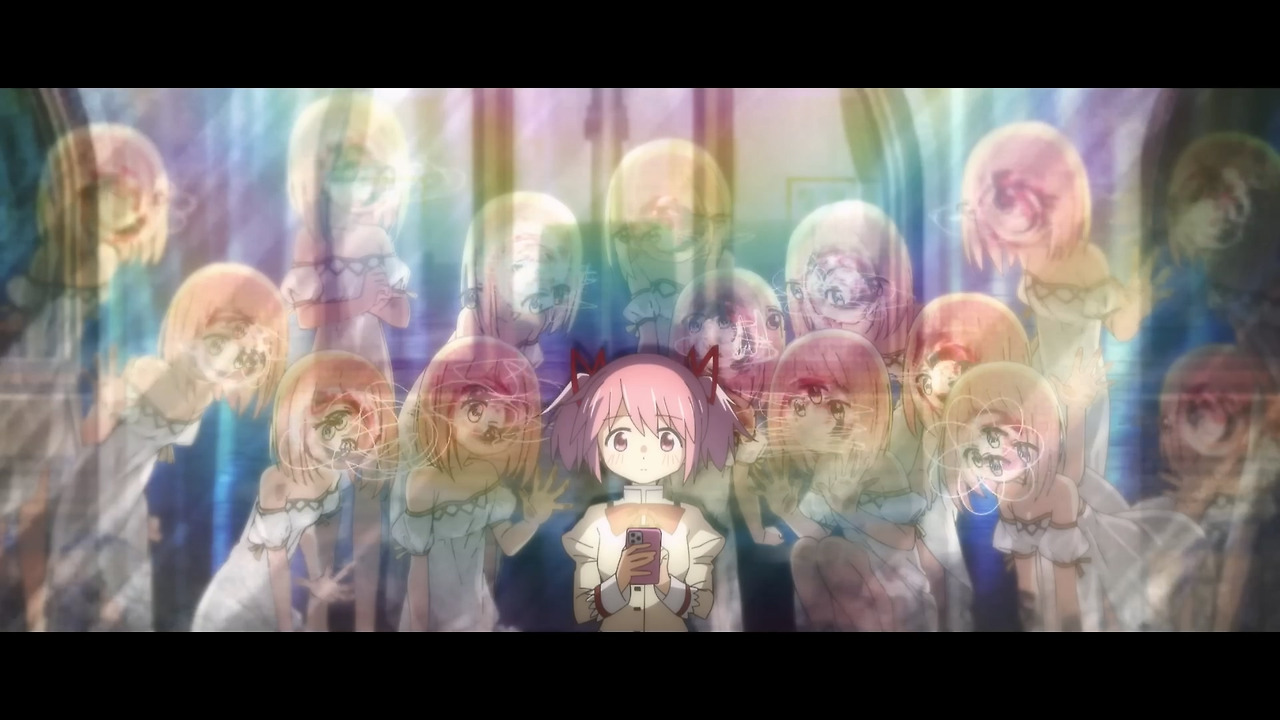
The fact that the two magical girls who stood by Marguerite at the very end of her mortal life closely resemble Selma and Choka is also profoundly symbolic. This indicates a bond that transcends generations, implicitly revealing that the true essence of the film's subtitle, Walpurgisnacht Rising (廻天/Kaiten), lies within "reincarnation and cosmic cycle." Furthermore, it presents a "beacon of hope," assuring us that the future awaiting Akemi Homura will by no means terminate in sheer, lonely despair.
As such, the targets of unrequited longing harbored by the three magical girls who gathered under the shared purpose of punishing the Devil—were vastly different. Choka craved empathy with the system, Selma sought validation through Kyubey, and Marguerite yearned for her own name and proof of existence. However, the fundamental core of the desires they embraced was invariably "hope." The narrative trajectory of these three magical girls—who met their ultimate conclusion at the climax not as grotesque, witch-like monstrosities, but in their intact, "human forms"—stands as definitive proof that they have finally achieved a genuine salvation stripped of all falsehoods.
This salvation, which is the very essence of hope, does not end as a single event but chain-reacts infinitely. Just as a small act of goodwill or charity in our reality ripples out to others, ultimately carving out a massive current toward a 'better world,' the narrative beautifully pierces through the "law of virtuous cycle" that heals the world through the solidarity of magical girls. This concatenation of salvation repeats even within the timeline of Walpurgisnacht Rising, as Madoka—"once again"—exercises her salvation upon Marguerite.
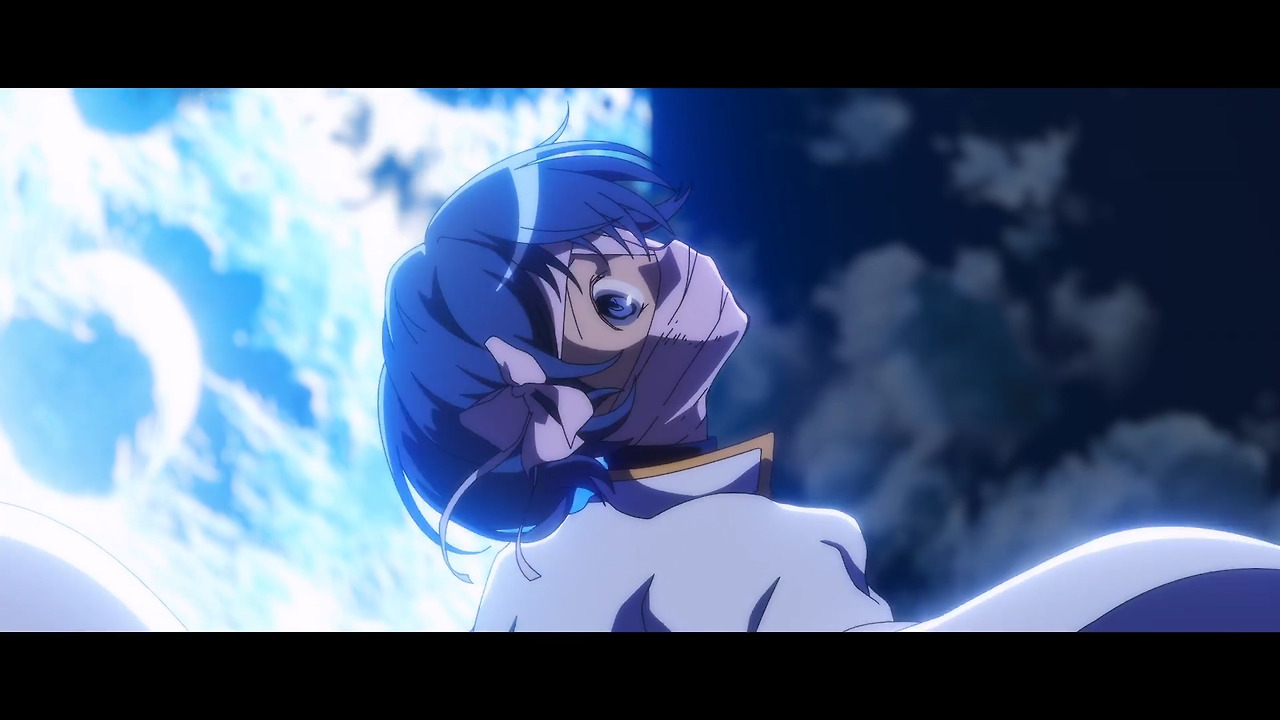
And amidst this endless clash of hope and despair among the magical girls, there has always been a cruelly suffering "Little Mermaid" Miki Sayaka. Stepping into the spotlight as the main protagonist of Episodes 4 through 8 in the original TV series, she ultimately vanished into sea foam; as Gen Urobuchi himself once confirmed, she was a character positioned to become a true hero following The Rebellion Story.
However, within this grand theater defined by the intense tactical warfare and high dimensional narratives between Marguerite and Demon Homura, it was incredibly difficult for Miki Sayaka—who became a magical girl through the simple, modest wish to save the boy she had an unrequited crush on—to fully hold her ground. In particular, while the "name of a witch" might have been a source of warped pride for Marguerite, it was likely an agonizing, wretched blemish that Sayaka wanted to hide above all else. In the end, like a shrimp caught in a battle between whales, she grows utterly exhausted by the collision of massive ideologies and hope, fleeing to her own room as a form of sanctuary.
Sayaka finds herself toyed with, treated as a mere consequence-free leverage—a kkotnolipae wielded by Homura. Unlike her appearance in The Rebellion Story, where she was brimming with absolute confidence and composure even upon unearthing the full truth of the narrative, she now displays a precarious vulnerability, swept away by her trademark sense of justice and ultimately worn down by profound fatigue. Just as she aimed her rough, erratic sword slashes at Homura in this film, she evokes a lingering anxiety that she might collapse once again. This was a harsh narrative that, while deeply cherishing Sayaka and the other magical girls, could not help but constantly drive them toward tragedy. In essence, it feels like a candid confessional from the production team, directly confronting the heartbroken sentiments of old fans who have anxiously waited for a peaceful rest to finally grace this overarching story.
Even after enduring such an excruciating ordeal, Sayaka retorts that Nagisa’s philosophy of "doing one's best at everything" is "insolent," only to grip her sword once more. Just like her devastating narrative in Episodes 4 through 8 of the original series—where she went astray because she was neither understood nor rewarded by the one she cherished most—she ultimately proves that the willpower to give one's all is a genuine engine of hope, because what matters most is an "unbreakable heart." And the one who has practiced this absolute, almost foolishly noble mindset more agonizingly than anyone else within the cosmic causality is none other than Akemi Homura—the very person with whom Sayaka constantly clashed, precisely because they were so deeply alike.
The Wheel of Dawn (暁の車) – Leaving Ruts on a Rought Path, a Bond Unveiling the Veil of Daybreak
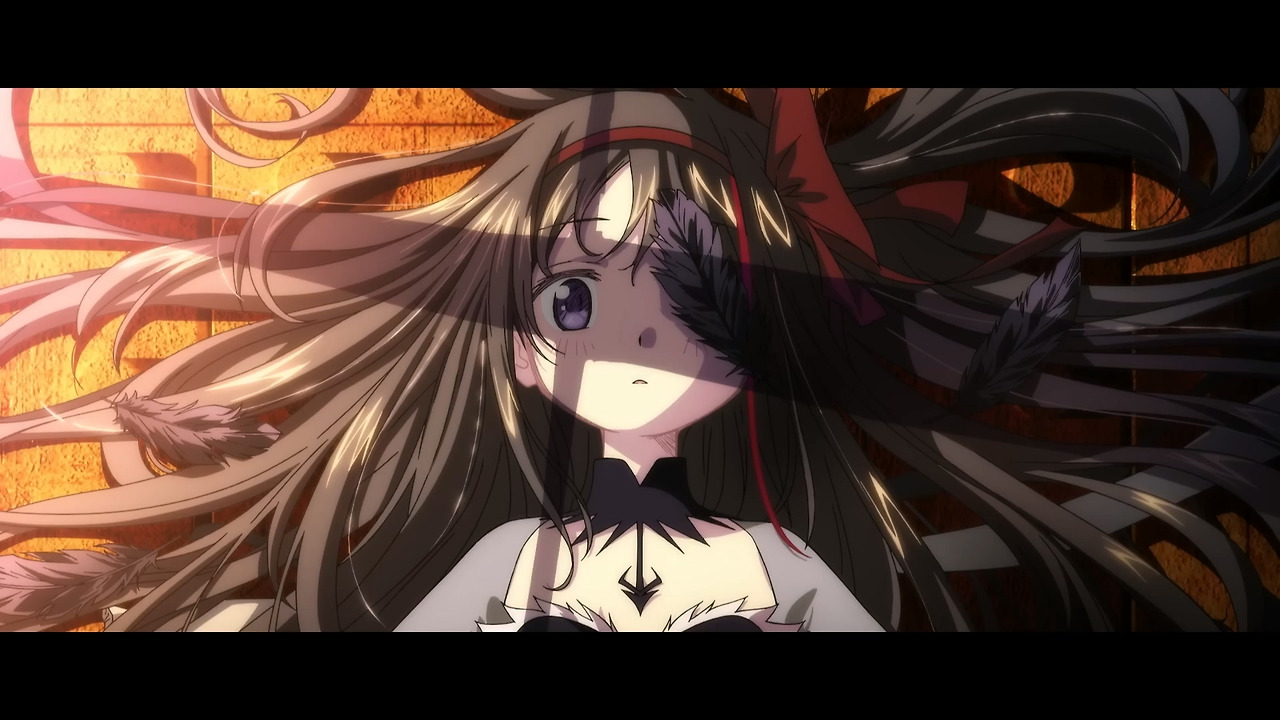
Excluding the martial arts genre where the concept of free roaming wandering heroes is permitted, the protagonists in Gen Urobuchi’s works are almost invariably bound to a cruel destiny where they can never achieve their initial goals. Akemi Homura is no exception, shackled to a fate where her wish—to save Madoka as an ordinary human being—can never be fully realized. This brutal fate of Homura is starkly laid bare when she is defeated in the first battle against Marguerite’s group, left collapsed at a construction site. The mise-en-scène orchestrated in that scene—featuring her "broken demon wings" and the "shadow of a cross" cast over her right eye—serves as a decisive foreshadowing that implicitly hints at the solemn, tragic destiny she must confront.
The "mirror narrative" continually emphasized throughout this review post is not only central to this specific film but stands as the most critical narrative trait and character foil structure anchoring the entire Madoka Magica franchise. It mirrors how General Grievous and Anakin Skywalker in the Star Wars Prequel Trilogy were swept into the conspiracies of the Clone Wars' mastermind, fell from grace, and were ultimately preserved within the prisons of their own armor. Alternatively, it shares a striking resemblance to the inner anguish of Char Aznable and Hathaway Noa in the Universal Century Gundam series, who drifted aimlessly after losing their first loves and ultimately drove themselves toward destruction. In this sense, Marguerite—the pioneer savior within the Madoka Magica universe serves as the perfect "mirror narrative" counterpart, projecting the exact trials and future that Homura is bound to face.
During the production of Walpurgisnacht Rising, director Akiyuki Shinbo reportedly expressed a desire to more actively increase the screen time and narrative presence of the titular protagonist, Madoka Kaname. While this was partly to validate her worth as the title character, it was primarily driven by Madoka’s core character trait: the belief that "the existence of ordinary happiness is the ultimate proof of true hope." This very essence serves as the powerful magnetism that inevitably draws Homura—who had ultimately failed to grasp such hope toward her. — Madoka’s steadfast honesty and straightforward nature became the driving force that allowed Homura, who harbors a fragile inner self beneath a tough exterior, to fearlessly wield the transcendent causality she accumulated across countless loops.
However, this same trait simultaneously acts as a fatal flaw a limitation of acting without deeply piercing into the broader context of a situation—vividly echoing the incident in Episode 6 of the original TV series where she recklessly threw Sayaka's Soul Gem off a bridge to stop a fight instigated by Kyoko. As the Law of Cycles emerges at the film's climax, Madoka once again attempts to return to it as if it were her unquestionable destiny. She does so because she perceives that suffering magical girls still exist across the past, present, and future at this very moment. The act of saving Marguerite only further solidifies Madoka's resolve to return to the Law of Cycles.
Unable to let Madoka go this time, Homura spreads her demon wings once more in resistance. Yet, in a devastating turn, she is rendered powerless and collapses upon the very first clash. Nevertheless, her most heartfelt inward cry—"Do not take Madoka away"—bestows upon Homura a decisive moment of spiritual ungi josik, making her realize once again the true fundamental nature of the wish she had originally made to Kyubey in the past.
It was the unwavering resolve: "To seize once more my meeting with the one who was precious to me, and to become a magical girl who protects her." The demon who appeared tough on the outside but remained fragile within having imprisoned herself inside the Silver Garden through long ages of loops—finally faced the singular beacon she truly desired with a clear and serene mind. It is the exact moment announcing that the "Wheel of Dawn (暁の車)," which had rolled relentlessly forward relying on a single strand of hope, has finally approached the final destination of its lengthy journey.
This narrative of sublime sacrifice and belated regret deeply carries the intentions of director Akiyuki Shinbo, who took sole charge of the ending sequence. Much like the structural framework of The Soul Taker—one of Shinbo’s early definitive works where protagonists had to engage in unwanted, tragic, and bloody battles against changed loved ones Madoka and Homura are driven to a fate where they must ultimately clash at the very end, precisely because each of them desired to save the other. Furthermore, in Magical Girl Lyrical Nanoha (Season 1)—another magical girl anime directed by Shinbo prior to Madoka Magica—the antagonist Precia Testarossa abuses Fate, a clone of her deceased daughter, while trapped in a chaotic, drifting maternal obsession, whispering that "it is all for your sake." Yet, at the final moment, only after witnessing the desperate cries of Fate calling her "Mother," does she experience the "tragedy of belated realization," unearthing the true essence of the love her daughter held.
Homura, too, comes to realize that she had, in effect, been controlling and abusing the very Madoka she sought to protect. As a "final resolution made at the absolute latest moment," she decides to confront this tragedy head on. Subsequently, the screen reveals Madoka adorned in her brand-new theatrical magical girl costume alongside the golden-eyed Law of Cycles. This is by no means a scene where Madoka begs for forgiveness from the Law. On the contrary, it is the most critical sequence announcing that the true master of the Law of Cycles has shifted.
The successor who inherits the Law of Cycles must bear the immense responsibility of an eternal punishment—where one’s very name and existence are entirely erased from reality. Facing this Law, Madoka speaks, yet the screen falls into complete, muted silence, withholding any audible sound. While "Goodbye (Sayonara)" stands as the most prominent hypothesis regarding this brief, silent line of dialogue, paradoxically interweaving the character of Madoka Kaname’s official character song, See You Tomorrow, makes it far more reasonable to predict the nuance of this muted utterance as "See you again (Matane)" or "See you tomorrow (Mata ashita)." This is because, prior to departing into the Law of Cycles, it serves as Madoka’s final gesture of consideration and her enduring promise of salvation whispered toward Homura.
Only then does the opening line of the ending theme song Kanata (〈彼方〉) which softly flows immediately after, singing "Goodbye, Goodbye (Sayonara)"—form a flawless narrative correspondence as Homura’s solitary response, enduring the painful act of letting Madoka go. Arranging the "lap-pillow scene" chronologically after the final battle and the succession of the universe is also a deliberate, straightforward approach by director Shinbo. For the protagonist, Akemi Homura, who had repeated nothing but agony and despair across fifteen long years of cruel loops, the director wanted to visually prove to the audience, at least once, her happy countenance—having fully attained the singular wish she desired at the ultimate destination she gave her life to reach.
Consequently, the entity embodying Ultimate Madoka—who shared that final conversation with Madoka is none other than the Second Overseer of the Law of Cycles: Akemi Homura. Crucially, considering that the theatrical pamphlet is meticulously designed with a dual-layer cover, the overarching narrative of the "Succession of Hope" becomes indisputably clear: the outer cover depicts Homura with her demon wings alongside Madoka, while the inner cover reveals Homura left entirely alone. It acts as a powerful final confirmation that Akemi Homura—the one from whose hope a demon was born, and the one who fully inherited that very hope to earn the status of a lonely saint—is the one and only successor worthy of carrying the weight of the Law of Cycles.
The fact that Marguerite—the very first savior for magical girls possessed an appearance closely resembling Homura when she initially debuted operates within this exact same context. This sequential, chaining structure, where Marguerite is saved by Madoka, and Madoka is saved by Homura, is the definitive core theme that this franchise never relinquishes despite its countless fragmented tragedies: the propagation of hope.
Ultimately, the message that this grand, avant-garde, and cruel fairy tale hurls at us is singular:
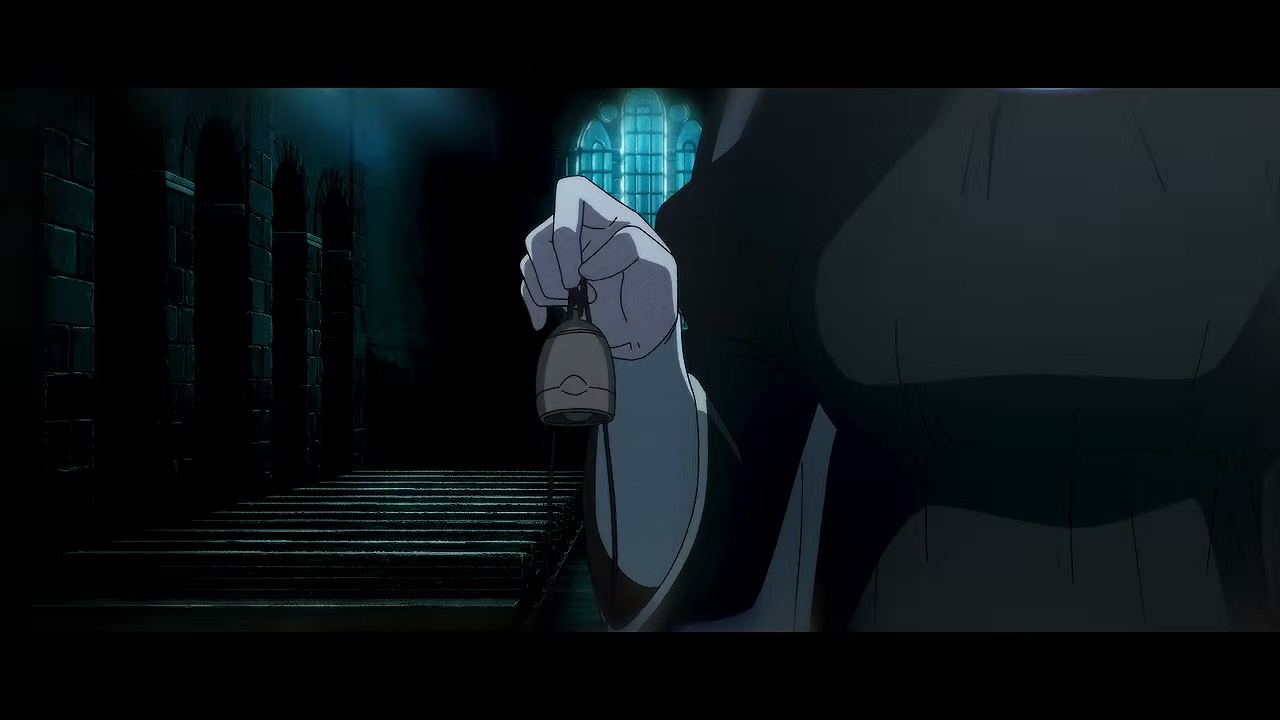
"Never allow yourself to be superficially deluded by the magical girls' appearance and flamboyant visuals. Beneath that bedrock flows the most agonizing yet sublime epic of salvation."
As this process of succession between the Devil and the girl draws to a close, the construction rebars and barriers that had cast a shadow over the cityscape throughout the entire film are finally stripped away, declaring the completion of a brand new city. A metropolitan architectural landscape reminiscent of the hanging garden cities showcased in the theatrical film Revolutionary Girl Utena: The Adolescence of Apocalypse unfolds beautifully on screen through the scene of Kyosuke Kamijo and Hitomi Shizuka walking to school. Transcending the forest of skyscrapers, the "Silver Garden" crafted by the Devil concludes its urban reformation, delivering a thrilling visual ecstasy that announces the dawn of a new era engineered by the next Master of the Law of Cycles. With this, the curtain falls on this bizarre comedy.
The sight of Homura resting her head on Madoka’s lap in the concluding segment is by no means the pathetic demise of a Devil helplessly crushed beneath the weight of the Law of Cycles. Both director Shinbo’s The Soul Taker and the Madoka Magica franchise share the core narrative grammar of Devilman, a tragic mythological chronicle that encompasses the very history of Japanese subculture. In the original conclusion of Devilman, Satan (Ryo Asuka) fails to control his twisted love for Devilman (Akira Fudo) and ultimately slaughters him with his own hands. The ending of Walpurgisnacht Rising assumes a precisely inverted structural framing to that catastrophic finale where Satan, undergoing a belated realization of the true essence of love, wails in absolute despair while cradling the severed upper torso of Devilman on his lap.
The way Director Shinbo flips this exact structural framing is a clever application of the "bench scene" meme, which has been continuously varied throughout each theatrical installment:
| Film | Presentation of the Bench Scene | Significance and Insight |
| Part I. Beginnings / Part II. Eternal | Rubbing cheeks together, flaunting a close and intimate bond. | The Unattainable Utopia: The pure, untainted relationship between the two before tragedy intervened—the very ideal Homura so desperately craved. |
| Part III. Rebellion | Twisting the opening's bench scene; Madoka falls in a T-pose, and Homura fails to catch her. | Visualizing Despair and Trauma: The psychological collapse and ruin of Homura as she disintegrates under the weight of repeated failures to save Madoka. |
| Walpurgisnacht : Rising | The plastic bench vanishes entirely; replaced by the most primal, intimate approach—a lap pillow—followed by fading away. | A Fleeting Salvation and a Smile: Transcending even physical spaces (the bench) to finally reach Madoka before vanishing like a mirage. Yet, the smile Homura carves onto her face while left alone signifies the completion of her ultimate purpose: "Even if I lose myself, I protected her." |
This humble depiction of Homura resting on Madoka’s lap stands as the definitive moment proving to the audience that the true essence of Homura’s wish was never a grand, lofty ideology like world domination. Rather, it was merely an extraordinarily ordinary, warm moment spent alongside her most precious person. In stark contrast to the tragedy of Satan, who wailed in despair while cradling a lifeless corpse, Homura achieves the happiness of genuine hope through nothing more than this brief, modest communion of a lap pillow. This is precisely the beacon of "The Redeemed False Devil" intended by Director Akiyuki Shinbo within this cruel yet beautiful fifteen-year epic of magical girls and the true, ultimate destination he delivers to the audience.

Your Silhouette Mirrors Mine — Despite All the Time We Shared
The hypothesis that [Akemi Homura = The Second Overseer of the Law of Cycles], which stands as the core highlight of this review, is undeniably a narrative of staggering proportions no matter how many times it is revisited. Having personally proposed the [Akemi Homura = Walpurgisnacht]" hypothesis during the original TV series' broadcast suspension years ago, I am acutely aware of just how radical this conclusion is. However, because this film is so heavily saturated with deliberately orchestrated foreshadowing and mirror-theory clichés from start to finish, I can confront this truth with more confidence than ever before.
In mythology, as well as a cinematic prop, a mirror serves as the most effective device to reflect "false happiness and unattainable utopias." For Homura, who deceived the very cosmos to inherit the position of the Law of Cycles—a domain that logically should belong to no one but Madoka the ultimate punishment is not the extinction of her existence or an eternal separation from Madoka.
Rather, it precisely mirrors the predicament of Haruki from the manga Heavenly Delusion (Tengoku Daimakyo); after having his brain extracted and transplanted into another body to save him from the brink of death, the young boy is forced to confront the reflection of Kiruko—his unrequited crush and the original owner of that body every single time he stands before a mirror. The brutal, agonizing loneliness of being forced to live out eternity wearing the exact form of Madoka, whom she so deeply adores—that is the true essence of the punishment Homura faces. Consequently, the aforementioned mise-en-scène of the "shadow of a cross" cast over her right eye strongly underscores the final ordeal of Demon Homura, who has become eternally unshackled from the cyclical prison of unilateral worship and obsession.
This behavioral principle of Akemi Homura who does not hesitate to alter even her own outward physical form if it serves her singular, irreplaceable purpose and means—acts as a pivotal narrative framework penetrating the entire franchise.
| Film | Homura's Form (Transformation Form) | Narrative Significance and Position |
| Original TV Series(Part I. Beginnings / Part II. Eternal) | Ribbon Homura (Agent of the Savior Madoka) | The Solitary Agent: Wearing the ribbons (memories) left by Madoka, she lonely patches the fractures (magical beasts) of the world Madoka saved. |
| Patt III. Rebellion | Demon Homura (Deceiver of Paradise) | The Pretender of Evil: Forcibly dragging human Madoka down from the realm of gods, imprisoning her in a false paradise, and self-proclaiming herself as evil. |
| Walpurgisnacht : Rising | Law Homura (The Third Grand Witch, Overseer of the New World) | The Second Law of Cycles: Abandoning her name and existence to flawlessly deceive the system, stepping up to carry the lonely cross in Madoka's stead. |
The "Clara Dolls," who served as scene stealers in The Rebellion Story, make brief appearances once again in this theatrical installment as Homura's familiars. However, the 15th doll, "Ai (Love)," remains absent this time as well, with her very existence completely erased from the theatrical pamphlet. Through this, the production team further emphasizes that the identity of this missing "Ai" is none other than Homura herself. This loss of existence (Damnatio memoriae) within the pamphlet paradoxically transforms into the most powerful piece of evidence supporting this major spoiler.
We must never forget the dialogue of the homeroom teacher, Kazuko Saotome, in Episode 10 of the original TV series, noting that the newly transferred Homura had long been hospitalized due to a chronic heart condition. The isolation and the harsh scars of her early childhood fundamentally castrated the growing child's self esteem. Consequently, Homura was left with no choice but to harbor a deeply starved, deficit heart beneath her fragile exterior of braided hair and glasses. To a girl in such a state, the sight of Madoka appearing before her eyes to exterminate the witch "Isabell" must have felt like the incarnation of a savior goddess herself.
When she first became a magical girl and fulfilled her wish to support Madoka, Homura must have been filled with unparalleled joy. However, as she carried on her solitary warfare—burdened by the truths Kyubey hid and the lamentation-filled hope of Madoka Homura continuously blamed herself, believing she was "unworthy of being loved." While strangling herself with the singular goal of saving Madoka, she remained utterly oblivious to her own blind spot: how to love herself. It is for this precise reason that the Clara Doll of "Love (Ai)" could never be separated into the physical form of a doll, remaining perpetually bound as the very essence of Homura’s core identity.
This is precisely why Kitri—the hidden boss witch was cast in Selma's position, serving as the most compelling design evidence on screen. When the Law of the Cycles and Madoka face each other head-on, the visual form assumed by the Law of the Cycles stands as a meticulously structured antithesis to Kitri's design.
The design of the witch Kitri, which projects Selma's inner self, features her wearing a black robe that envelops her entire body while carrying Kyubey—the object of her adoration on her head. This form visualizes her twisted blind faith and one-sided obsession with Kyubey. On the other hand, the new Law of the Cycles inherited by Homura takes the form of Ultimate Madoka, showcasing a costume wrapped in pure white cloth with a cape collar. The reason Homura's costume is so profoundly thrilling is that it stands as her own magnificent manifestation of proof (Quod Erat Demonstrandum), successfully deceiving every single member of the audience outside the screen—save for Madoka herself.
The stark visual contrast between Kitri (Selma), who ruined herself by succumbing to Kyubey's causality in a black robe, and the "Law of the Cycles Homura," who completely inherited Madoka's divinity and cross in pure white attire to become the ruler of the new world, is truly awe inspiring. Through this relentless symmetry of color and motifs, the creators pass judgment on Selma's false worship and drive a perfect visual stake into the narrative justification of Homura's ascension as the second administrator of the Law of the Cycles.
This facet of Homura closely mirrors Kouta Kazuraba, the protagonist of Kamen Rider Gaim, also penned by screenwriter Gen Urobuchi. Much like how Kouta fought through various armored forms only to mutate from an ordinary youth into an Inves in the final chapter ultimately becoming the transcendent entity known as the "Man of the Beginning" and visually completing the thematic message of transformation—Homura’s true method of warfare lay not in raw military might or elaborate machinations, but in the alteration of form driven by psychological resolution. Early in the film, the sight of Homura silently executing the "Demon Lizard Telephone Service" while draped in a gothic dress even delivers a thrilling visual ecstasy of absolute work ethic to the audience.
"Rather than betraying my longing to meet you once again... yes... I can bear any sin! No matter what form I take, as long as you are by my side, I know it will be alright!"
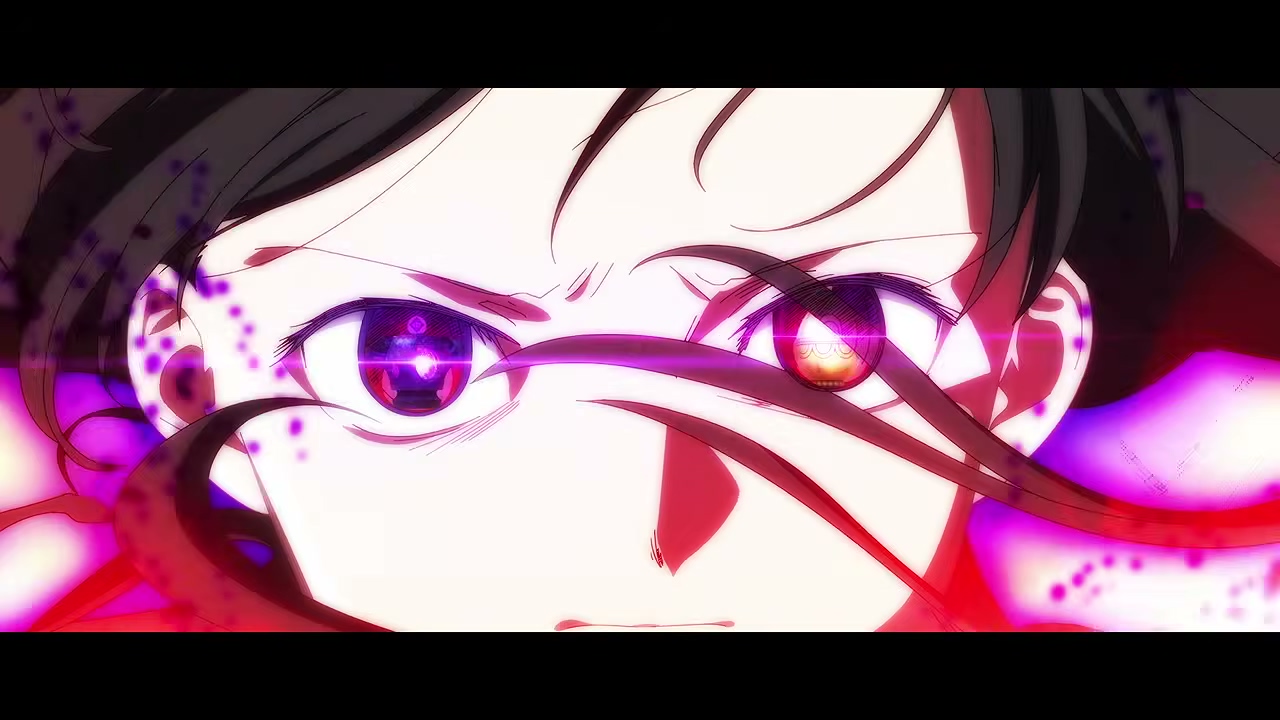
"I am the Devil. Even if I must rebel against miracles... I will reclaim Madoka Kaname from the hands of fate!"
This behavioral principle of Homura who does not hesitate to alter even her own outward physical form if it serves her singular, irreplaceable purpose—precisely interlocks with the confession she herself drove as a definitive wedge during the climax of the previous film, The Rebellion Story.
The radical ultimate evolution displayed by Homura in Walpurgisnacht Rising is the fruit of flawlessly re-proving this sorrowful vow upon the screen. For Homura, "transformation" (the alteration of form) is not a mere genre gimmick of magical girl tropes. It is the manifestation of a resolution to thoroughly negate her fragile, easily wounded past self, and to be reborn as a stronger, more transcendent entity capable of protecting her precious one. It is a desperate, agonizing struggle shaped by the state of ungi josik and "Clear and Serene Water" that she finally established within her own heart—having passed through the trials of the visitors who arrived from deep within the dark, eternal ages, and through those very mirrors. In essence, it is an inevitable evolution demonstrated by Homura’s core deficit and yearning: the absolute belief that "only through transformation can salvation finally be achieved."
"Akemi Homura! You, of all people, must never call Madoka the 'Law of Cycles'!!"
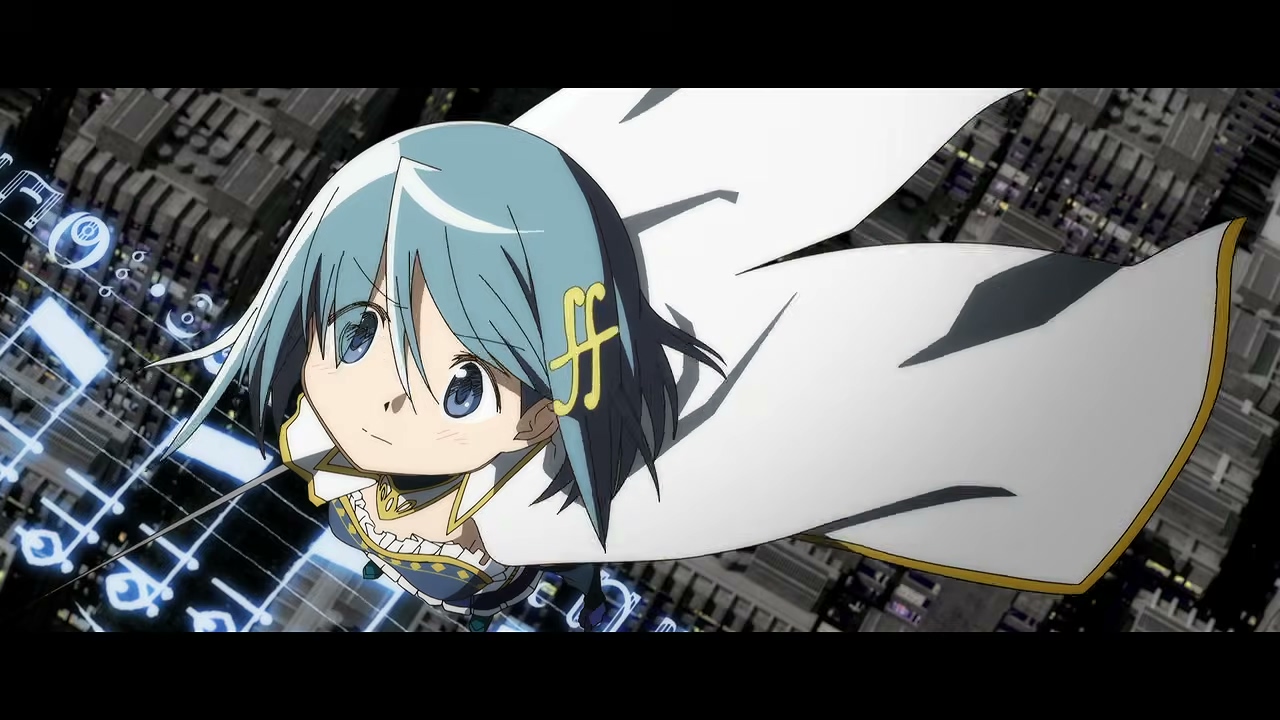
"Speak up, because you are the Devil. Say it out loud—that if you cannot save Madoka, you will never accept this world, no matter who saves how many others!"
The clues justifying Homura’s succession do not rely solely on the relationship between Madoka and Homura. The support and validation from her comrades serve as the most powerful evidence. Having put an end to her brief yet dense wandering, Sayaka returns to drag Selma down. This single exclamation she hurls during the final showdown against the Law of Cycles—no longer harboring resentment toward Homura is a desire more powerful and heartfelt than any other. Miki Sayaka was someone for whom it took an agonizingly long time to have her heart genuinely recognized, despite having once wished to save the boy she had an unrequited crush on.
Yet now, rather than viewing Homura through the lens of the "Law of Cycles" a massive, mechanical system that merely consoled and validated the wish she sought to protect—Sayaka purely understands Homura’s heart through a deeply human perspective: simply as the "friend of a precious friend." Ever since The Rebellion Story, she has fulfilled her massive destiny as the hero who encourages the Devil. That is the real reason the production team assigned this specific line to Miki Sayaka.
If the finale had truly concluded with the Law of Cycles mercilessly crushing Demon Homura to bring an end to the situation, that would have been the ultimate betrayal to the audience who had empathized with Homura's solitude and desperation throughout the franchise's history of over a decade. It would be nothing short of an insult to the very foundation of the series: an epic poem that celebrates hope by overcoming tragedy.
The decisive clue lies in Madoka’s "facial expression" as she attempts to return to the Law of the Cycles. She does not offer any comforting words to reassure Homura or her friends, nor does she forcibly bind them within her barrier. Most notably, on that path back to the Law of the Cycles, the uniquely benevolent "smile" that had always graced Madoka’s face is entirely wiped away.
Throughout the series, Madoka has always maintained a sacred, selfless smile, even in the face of tragic farewells. The absolute disappearance of that smile is visual evidence exposing a grim truth: returning to the Law of the Cycles is by no means a happy ending for Madoka herself, but rather a cruel punishment one where her humanity is castrated, and she is frozen upon an eternal throne. Consequently, this precise direction visually demonstrates to the audience with devastating clarity the narrative justification for why Homura must win this psychological warfare against the Law of the Cycles and usurp its place.
Therefore, the essence of the cheers delivered by Sayaka’s group is a clever application of the "Spirit Bomb (Genki-dama)" scene—the very core of the Dragon Ball theatrical films and essentially the "Miracle Light" cliché from the Pretty Cure (Precure) franchise. It mirrors the iconic moment in the final battle of Fullmetal Alchemist: Brotherhood, where Edward Elric relentlessly drives the Dwarf in the Flask into a corner, backed by the roaring chants of his comrades. Alternatively, it precisely interlocks with the climax of The Legendary Brave Da-Garn, where all living entities' wishes gather to bestow miraculous power upon Da-Garn right before Earth’s annihilation by the absurd, destructive pleasure of the absolute evil, Ohbos—as well as the miracle fueled by comrades screaming with their entire being during the battle against Zonuda in The King of Braves GaoGaiGar. Within narrative conventions, this stands as a variation of the most royal and orthodox direction: the chosen one who receives everyone's unified cheers ultimately becomes invincible.
As if delivering a sharp wake-up call to viewers who had hitherto consumed the Madoka Magica franchise merely as an "anti-magical girl genre" rife with cruel and bizarre violence, the production team boldly declares through Sayaka's voice that this work is, at its core, an "orthodox magical girl anime" that sings of miracles and bonds. The counterattack of Homura—who passes through the three clear mirrors (明鏡) brought by the newcomers who mirrored her own reflection: the "deficits and wounds" shown by Choka, the "warped worship" projected by Selma, and the "savior's tragic destiny" warned by Was (Marguerite)—and finally stands against the formless system backed by her comrades' cheers, is the most agonizing yet sublime final proof of magical girls validating their own humanity within this cruel universe.
Reflecting upon the trajectory of the final showdowns displayed throughout the franchise’s history, the overarching raid-like nature and narrative weight of this theatrical installment become undeniably vivid:
| Film | Final Boss / Raid Members | Characteristics and Combat Direction |
| Original TV Series (Part II. Eternal) | Walpurgisnacht / Akemi Homura | Military Fortification: Transforming the entire city into an armed fortress backed by a military ballistic interception network. |
| Part III. Rebellion | Homulilly / Magical Girls (excluding Homura) and the Law of Cycles' Familiars | Magical Extravaganza: A dazzling celebration of magical combat seamlessly interwoven with the avant-garde artistry of Gekidan Inu Curry. |
| Walpurgisnacht Rising | The Law of Cycles / Demon Homura | Cosmic Intervention: Demon Homura is helplessly suppressed and bound, yet fueled by her comrades' cheers, she reaffirms her wish to directly interfere with the Law itself. |
Consequently, within the structural framework of the film’s timeline, the true final boss is by no means an entity like Selma. The "Law of Cycles" is the only existence truly fitting for the role of this film's final antagonist. The Law of Cycles is a formless, mechanical system stripped of all malice and utterly castrated of human emotion. This operational structure bears a spine-chilling resemblance to "Kriemhild Gretchen," the witch form of Madoka Kaname. According to the official witch database, the nature of the Witch of Salvation, Kriemhild Gretchen, is "Mercy"; she forcibly elevates all living entities on this planet to usher them into a brand-new heaven of her own design. This parallel structure—functioning as a literal blueprint replication of that holy yet brutal celestial system—stands as the vital mechanism that orchestrates the film's conclusion in the most solemn and breathtakingly beautiful manner.
This confrontational structure against a twisted wish granting machine serves as a powerful homage to Fate/Zero, a prequel novel project that screenwriter Gen Urobuchi previously participated in. The protagonist of Fate/Zero, Kiritsugu Emiya, was a stubborn zealot who operated solely on the prompt of "extreme justice" without understanding the true nature of the system (the Holy Grail). Because the Holy Grail he faced had long had its logical structure broken by malicious spaghetti code, Kiritsugu unscrupulously makes the drastic choice of "destruction."
However, Homura understood the harsh grievances endured by magical girls better than anyone else. (The alternative blueprint she proposed is the aforementioned "Demon Lizard Telephone Game" system.) For this reason, she did not desire a destructive "table flipping" approach like Kiritsugu's. Having watched Madoka's wish from the closest proximity, entirely shattering the system Madoka established would be the absolute worst alternative—a complete negation of Madoka's heartfelt hope and wish. Ultimately, to wholly save the magical girls while simultaneously reclaiming Madoka's happiness, the singular path left for Homura to traverse was "information forgery" targeting a systemic loophole.
If Homura's narrative arc had halted at the "Devil" form from the previous film, it would have been nothing more than a fall from grace blinded by obsession. However, her ultimate evolution into "Law Homura" fueled by her comrades' encouragement shifts the entire narrative paradigm. It represents the visual and narrative pinnacle of completion where a fragile girl who once suffered from a deep deficit and physical limitations due to childhood health issues finally and completely accepts a flawless divinity (or rather, the immense responsibility of a Grand Witch) for the sake of others. This analysis—that the main creative staff and her magical girl comrades would absolutely refuse to let the story terminate in the "Devil Form"—stands as an absolute confirmation when considering both genre conventions and Gen Urobuchi's overarching creative disposition.
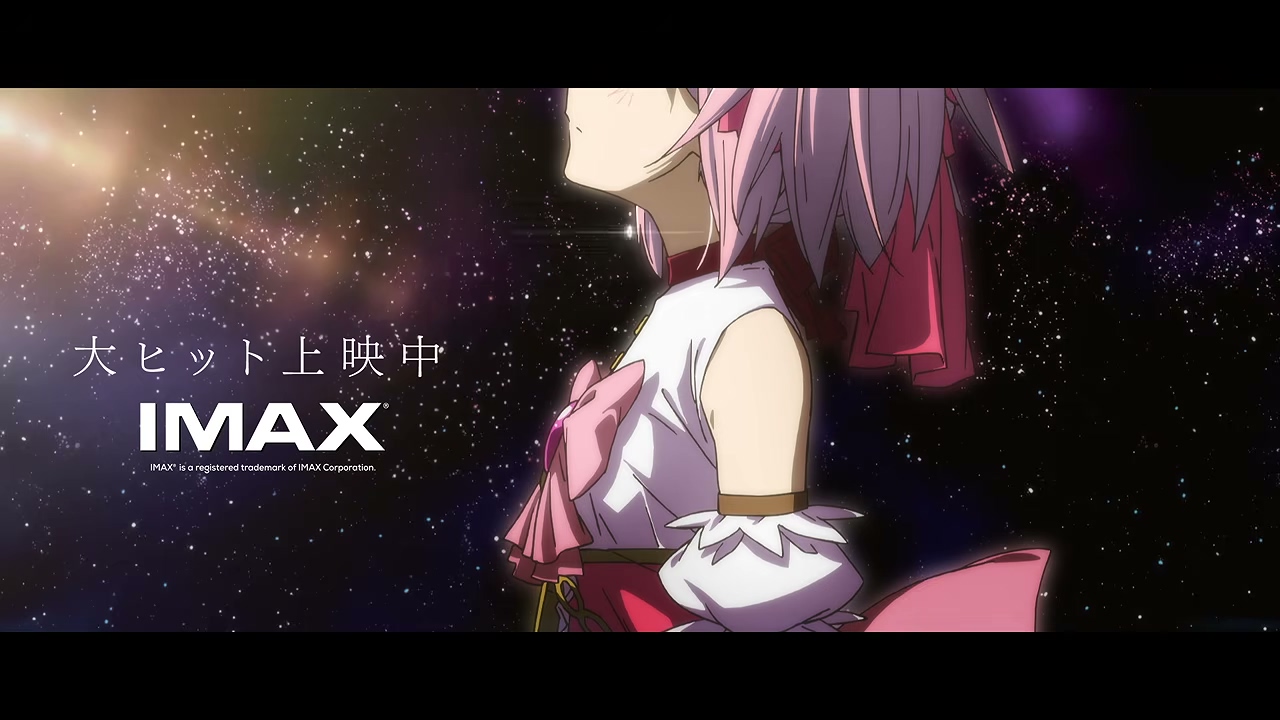
The lines spoken by Madoka after facing the Law of Cycles approach the audience as a literal "boomerang," flawlessly flipping the harsh warning that Homura had hurled at Madoka way back in Episode 1 of the original TV series. The final dialogue spoken by Madoka directly pierces through the brutal chronology that Homura has traversed:
"Homura-chan, do you think your own life is precious? Do you hold your family and friends dear?"
To save Madoka, Homura sacrificed everything that constituted "Homura's individual life" her family, her friends, her ordinary existence—throwing herself entirely into the singular light that was Madoka Kaname. On the other hand, Madoka is merely an ordinary middle school girl who has never once lived a life burdened by the weight of extreme cosmic causality like Homura. Consequently, when the lives of these two girls collided, the narrative was bound to diverge. Madoka, by becoming the Law of Cycles and intending to retrieve Homura when the time came, was trying to save her "best friend" in her own way.
"...Will you forgive this world, even if it is far removed from the ideal that someone once wished for?"
"Ultimately, the clash of their strayed convictions is nothing short of an absurd drama born from a relentless collision between the crushing weight of cosmic laws and an individual’s desperate possessiveness. This very friction is the root of the entire Madoka Magica narrative structure, where not a single word of true sincerity—'Despite All the Time We Shared (あんなに一緒だったのに)'—could ever fully reach the other. The indecisive and fragile Madoka became a God, yet she failed to fully salvage Homura's soul. Rather, upon realizing that the throne of the Law of Cycles was a desolate hell filled only with solitude, and witnessing Homura willingly shoulder this excruciating agony, Madoka sheds tears—not in defeat, but in a profound plea for forgiveness, finally reaching her hand out to her."
For this very reason, Homura willingly shoulders the overwhelmingly cruel price—the extinction of one's existence—in Madoka's stead, a penalty far too heavy for a wish so modest and natural: salvation from despair. Even if she cannot convey it through words, and even if her existence is forgotten, Homura does not hesitate to carry the cross as long as Madoka can reclaim her life as an ordinary, happy girl. This remains true even if it means walking the path of a usurper who dragged down an idol from her pedestal, deceiving the system and blaspheming God. Confronted with this genuine, deep love of the Devil, Madoka, who has returned through the cosmic cycle (Kaiten) into reality, recognizes Akemi Homura as "My best friend! (わたしの、最高の友達!)" despite never hearing her voice—and with this, the curtain falls.
The visual direction of Homura’s barrier breaking down after the confrontation with the Law of Cycles is, in fact, a rite of passage signaling that her appointment as the "second administrator of the Law of Cycles" has been finalized. The moment the system transfer is complete, Homura transcends being a mere magical girl or devil, reborn as an absolute administrator endowed with the right to reshape the world.
With such omnipotent authority, unfolding an arcological cityscape like an aerial garden city is a simple task. If the ending had truly been Homura's helpless defeat, the scene would have depicted the utter and catastrophic collapse of the entire downtown area, rather than the removal of the construction fences surrounding it. In other words, this finale perfectly pierces through the sublimity of Ultimate Madoka, presented as a natural landscape in Eternal, and the déjà vu of the deceptive 'Silver Garden' unfolded in Rebellion.
Furthermore, the devil, who transformed a lie into reality, exerts the true omnipotence (GODS) achievable as a great human being. In doing so, she visually declares the ultimate value of Walpurgisnacht: Rising (廻天) by drawing the curtains on the sublime, golden stage that unfolded during the advent of the Law of Cycles, replacing it with the completion of the aerial garden city.
In fact, thirteen years ago during the domestic screening of [New Feature] Rebellion, right before heading to the theater, I experienced a peculiar "parallel theory" a serendipitous synchronicity where I happened to watch the final episode of the old-school mecha masterpiece, Armored Trooper Votoms. While the masses were debating Homura’s demonization as a "character assassination" or "moral degradation," blindly deifying Madoka's sacrifice at the end of the TV series, the very source of the rebellious defiance that allowed me to stand alone in supporting Homura’s true intent, even to this day, lay precisely in that moment.
Consider Chirico Cuvie’s magnificent rejection of the divine: when offered the throne of God (Wiseman), he pretended to usurp it only to shatter the entire system itself, choosing instead a profoundly human life with his beloved Fyana. The coup executed by Homura in Rebellion was no different; it was merely the purest manifestation of her true intent to liberate Madoka as a human being—a girl who was slowly losing her smile, trapped within a system of cosmic gaslighting.
And now, thirteen years later in 2026, the moment I witnessed Madoka’s uncharacteristically cold, vacant stare approaching as the Law of Cycles in the climax of Walpurgisnacht: Rising, my long-held conviction was finally vindicated as the absolute truth. Homura's rebellious spirit chose the path of both demon and saint, not for the sake of a vast cosmic machine, but to restore the smile of the one precious person who mattered. At the dawn where the story reaches its end, what superimposed itself over Madoka's reclaimed smile was nothing less than a victory over an immense destiny—a sublime triumph born from a magnificent transformation engineered solely for one precious soul.
The ending theme lyrics of the Madoka Magica theatrical series have always served as a definitive beacon, summarizing the events that transpired within the work in the most direct and explicit manner. Considering the sheer weight of Your Silver Garden in the previous film The Rebellion Story which delivered a shocking finishing blow by making the audience instantly grasp what had truly happened—it is self-evident that the production team would have meticulously poured the core contents and true essence of Walpurgisnacht Rising into this new theme song after a 13-year hiatus. This is precisely why we must retrace the lyrics of the ending theme, Kanata (〈彼方〉), while keeping in mind Director Shinbo’s intentional staging: showcasing Homura, who attains a fleeting moment of peace by resting her head on Madoka’s lap, yet is ultimately left entirely alone, silently carving a smile onto her face.
| Phase | Key Lyrics | Narrative Inference & Significance |
| Introduction | "Goodbye, goodbye," "I called out to the beautiful sky" / "The two of us went on a brief journey together" / "With both tears and pain as they are, we dreamed of the future" | Loss and Pain Over Beautiful Memories: The epic narrative, accumulated causality, and final farewell between the two girls spanning from Beginnings to The Rebellion Story. |
| Development | "Shall I try believing in this world just one more time?" / "Shall I simply love it over and over again from now on?" / "Cradling the breaking life inside my arms" / "I am right here, calling out to you" | The Resolve to Move Again Beyond Exhaustion: Fueled by her comrades' cheers, Homura blocks Madoka from returning to the system (the Law) and resolves to love the world in her stead. |
| Climax | "In this fleeting world where only precious things have multiplied" / "Smile warmly for me" / "Touch me" / "Please remember the light of spring" | The Solitude Borne by the Successor of the Law: Proving that the identity of the one who usurped the master of the system and remained alone on the throne to protect Madoka is none other than Akemi Homura. |
| Resolution | "Echo high into the sky, oh song of mine" / "Pierce through someone's heart" / "Before vanishing into the void, head toward the furthest shore" | The Essence of the Franchise & Synopsis of the Sequel: A harsh yet beautiful hymn of hope—even if worn down by fate, they love the world until the very end and march toward the future to save each other. |
| Epilogue | "I am right here" / "Calling out to the future" / "The end of the story marches toward the dawning daybreak" | Cheering the Future of the Evolving Franchise: A message of encouragement from both the Law of Cycles and the production team, promising to await a new future anytime, anywhere. |
Near the very end of the ending credits, a powerful visual sequence unfurls: a set of white footprints (symbolizing Madoka) briefly makes contact with Homura’s black footprints, only to diverge, leaving only the black footprints to continue onward alone.
This brief sequence serves as the ultimate, definitive cornerstone proving that Akemi Homura has indeed become the Second Administrator of the Law of the Cycles. The "contact" between the two footprints signifies the complete handover and inheritance of the monumental power and the cross of the Law of the Cycles from Madoka to Homura. Concurrently, the subsequent "divergence" and the "lone advancement of the black footprints" provide heartbreaking visual proof of their farewell implying that after what may be their final encounter, Madoka is sent back to the reality of an ordinary human life, leaving Homura entirely alone to tread the path of eternity as the solitary administrator.
To summarize the foreshadowing that validates Akemi Homura's rightful succession as the Second Overseer of the Law of Cycles:
- Director Shinbo’s Cinematic Vision: A clever variation of the alienation and distorted concepts of salvation forged through The Soul Taker and Magical Girl Lyrical Nanoha (Season 1).
- The Structural Perfection of Gen Urobuchi’s Script: A masterclass in circular narrative elegance achieved through a deep respect for the original TV series.
- Homura’s Yearning for Transformation: An inevitable trajectory toward discovering her singular answer—"establishing myself as the magical girl who protects Madoka."
- Heartfelt Support from Her Comrades: Encouragement from her fellow magical girls, including Miki Sayaka and Marguerite, who served as mirrors reflecting her own soul.
- Madoka's expression as she returns to the Law of Cycles: A completely uncharacteristic blank stare and cold behavior, creating the very justification for Homura to desperately stop her.
- Strict Adherence to the Universe's Lore: A faithful execution of the system's grammar requiring "the extinction of existence" as the price for reigning on the throne, forcing her to directly endure the tragedy of Gretchen from Goethe’s Faust.
- Cleverly Planted Clues in Spoiler-Banned Official Merchandise: Strategic hints embedded where fans least expect them, such as the dual-layer pamphlet cover design, the cross shadow visual sequence, and the persistent exclusion of the 15th Clara Doll, "Ai (Love)."
- The Blueprint of the Ending Theme: The lyrics of Kanata, which follow the franchise's tradition of self-deprecatingly yet explicitly summarizing the film's overarching narrative.
Because these Eight steadfast pillars provide an unshakeable foundation, I confidently declare that the radical hypothesis of"The Second Overseer of the Law of Cycles: Akemi Homura" possesses far greater persuasive weight and authority than any other interpretation.
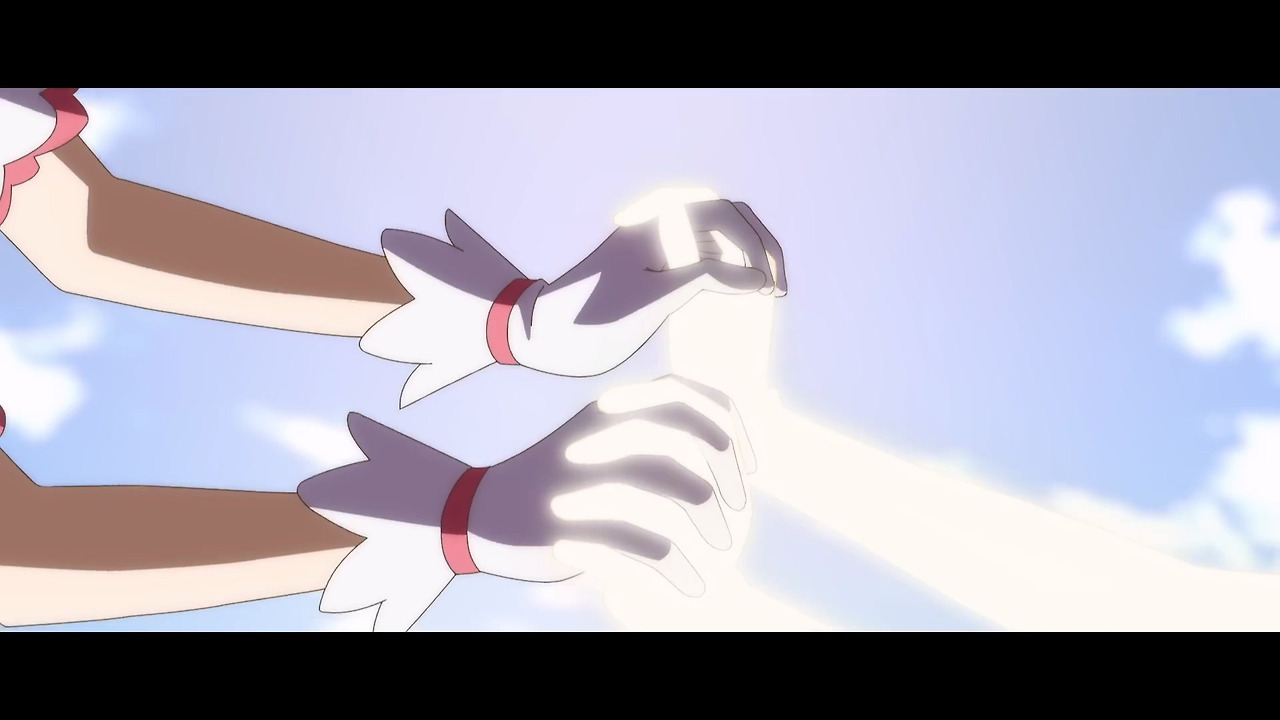
Beyond the 'Story of Falsehood' – The End of the Narrative Heading Toward the Dawning Daybreak
The rules governing the subtitles adhered to throughout the theatrical series have finally been shattered in Walpurgisnacht Rising. This serves as a more definitive final chapter for the Madoka Magica franchise, as well as the production team's earnest yearning for a new cosmic revolution (Kaiten). Yet, reflecting quietly upon the narrative thus far, I personally wish to christen an alternative Plan B subtitle for Walpurgisnacht Rising: "The Story of Falsehood," reached after traversing Beginnings ➔ Eternal ➔ Rebellion. This tragicomedy of mismatch, where falsehood distorts and twists reality, is the absolute core linguistic grammar of the Puella Magi Madoka Magica franchise.
For this reason, Director Akiyuki Shinbo’s staging, Gen Urobuchi’s script, and Gekidan Inu Curry’s visual artwork and witch lore radically clashed and repelled one another, stretching the limits of their respective maximum capabilities to the absolute extreme. It was quite literally a catastrophic production structure that operated on the mindset of "No matter how long it takes, let's settle the score once and for all," which ultimately forged the awe inspiring masterpiece that is Walpurgisnacht Rising. The production period, spanning a staggering 13 years since the screening of The Rebellion Story, closely aligns with Director Shinbo’s characteristic perfectionism. Particularly notable is the directorial participation of Tomohiro Furukawa, a devout fan and direct disciple of Director Kunihiko Ikuhara—famed for Revolutionary Girl Utena. Tomohiro Furukawa had previously caught the attention of Shaft's production team by showcasing the absolute pinnacle of prop mise-en-scène through his previous work, Revue Starlight (including its theatrical film).
This installment implements an obsessively detailed arrangement of props and flawless character positioning—to the extent that it unfailingly prompts one to nod in agreement, thinking, "No wonder the production period took so long." In a way, the desolate backdrop of Mitakihara’s construction site might be a self-deprecating Easter egg from the production staff, subtly mocking the fact that even they had no idea the production of Walpurgisnacht Rising would drag on for this long. Furthermore, the "computer power outdoor unit fan" sequence showcased at the entrance of "Nazuka Sokotsune (名塚底根)" serves as a flawless homage to the iconic ventilation fan direction in Director Ikuhara’s masterpiece, Mawaru Penguindrum. While the ventilation fans in Penguindrum visually materialized the ugly blemishes of lives entangled by the sins of the parental generation, the outdoor AC fan in Madoka Magica symbolizes the most hideous essence and blemish of the magical girls: "the absolute bedrock of the witch database," visually flipping the trauma switch of the protagonists. It stands as the most passionate yet relentless display of respect sent by Tomohiro Furukawa toward his mentor, Director Kunihiko Ikuhara.
I anticipate that many fans are still anxiously awaiting the film's release, and I count myself among them. This latest installment, Walpurgisnacht Rising, is a masterpiece where the core attributes of the "Sekai-kei (世界系)" genre—a unique, foundational archetype of Japanese subculture are maximized to the absolute limit. This is because the fate of the entire cosmos is directly bound to and driven by the deeply personal, intimate relationship between the two main protagonists. Screenwriter Gen Urobuchi initially proposed splitting the story into two parts due to the immense volume of his early drafts. Reflecting this massive scale, the dialogue script moves at a blistering pace throughout the film, highly reminiscent of Shaft’s Monogatari series. Consequently, the omission of a ClariS opening track—a classic staple of the franchise—interlocks with the compression of this bloated script. It implicitly signals that the film has shifted its direction away from "universal salvation" to focus entirely on "a narrative dedicated to a saint who, while profoundly lonely and insular, gives her entire being for the sake of devotion."
Although I acknowledge that the film’s genre specific polarizing nature and frantic visual composition may disrupt immersion, my reason for positively evaluating Walpurgisnacht Rising remains distinct.
It is because the individual narratives imbued with the magical girls' actions and sincerity, along with the ironic conclusions, produce the signature dark and profound allure of the Madoka Magica franchise, once again fully packing the intrinsic value of a "traditional magical girl genre." Consequently, it was a thoroughly satisfying cinematic experience for me.
To cushion the impact of this heavy, unyielding Sekai kei emotional tone, the film introduces the "Demon Lizard Telephone" gimmick. The opening ten minutes present a visual spectacle where an ordinary girl borrows Akemi Homura’s magical girl attire, flamboyantly taking center stage to fight—delivering a refreshing visual shock to viewers long accustomed to the traditional grammar of the Madoka Magica franchise. Ultimately, the reason Homura—who inherited the Law of Cycles—could finally earn the validation of her fellow magical girls is that she successfully demonstrated the absolute efficiency of her "Demon Lizard Telephone Game" system from the very beginning. Her succession was made possible precisely because of the heartfelt recognition of her capability, proving that despite the Devil's clumsy interpersonal nature, the Law of Cycles could safely be entrusted to her.
In addition, the urban lighting display showcased by the cluster of LED light drones in the opening sequence is a result where Director Shinbo's inclination as an urban architecture enthusiast is 100% manifested once again. Unfolding her very own urban engineering technology, Homura presents the milestone for the franchise's upcoming future in the form of a "technological salvation (Demo-tech)." In fact, a smartphone interlocked viral marketing campaign was actually conducted in Japan under an event titled "Lord Lizard's Special Telephone." This induces a multidimensional experience, making real-world consumers feel as though they are stepping right into the story as "choosers" who directly forge a "contract." This structure of participating via telephone evokes interactive communication reminiscent of classic live ARS broadcast games, proving a massive universality and extensibility—demonstrating that the qualification to become a magical girl does not require extraordinary status, but can be achieved by anyone who "understands the value of ordinary happiness." Just as the aforementioned character setting of Shi Choka was a respect toward the Chinese-style martial arts noir genre, this directly aligns with the case of Mobile Fighter G Gundam, which stepped outside the framework of the Universal Century and opened the prelude to the Alternate Universe (AU) Gundam through a radical fusion with martial arts grammar. Through this groundbreaking system of the "Demon Lizard Telephone," the production team proposes infinite possibilities for the genre's future that the Madoka Magica franchise will navigate.
The ending credit theme, Kanata (〈彼方〉), derives its very title from "Toward the beyond (Kanata e)," the opening phrase of Kalafina’s Misterioso—the climactic track that brought salvation to Homura in the previous film, The Rebellion Story. It sings of the dawning daybreak that Demon Homura has finally reached at the tail end of the ashes of her long wandering. This ending credit sequence precisely inverts the animation framing of Your Silver Garden from The Rebellion Story, which had displayed thick, neon-sign-style pen strokes sketched against a pitch-black backdrop. Instead, it utilizes the pure white background of Hikari Furu (Light Falling)—the ending theme of Eternal—as its foundational canvas to visually map out a life story where footprints are carved into reality.
Crucially, the territory for Akemi Homura’s footprints occupying the bottom left corner of the screen does not appear during the initial segment of the ending; this is another visual allusion to Homura’s heartbreaking childhood, where she was unable to firmly tread upon the earth due to her long, confined hospital life with a chronic heart condition. It directly depicts a genuine reconciliation that transcends the intersection of hope and despair, and the collision between falsehood and truth, through the footsteps of "memories"—tracing the meeting and divergence of Madoka and Homura, who relied on each other more than anyone else. Combining the visual aesthetics of Hikari Furu and Your Silver Garden while inheriting the underlying emotional resonance of Misterioso, this ending theme stands as a meticulously crafted tribute dedicated to the fans who have cherished the work for over a decade. It operates as a warm farewell from the production team, whispering that even if a completely altered Magica universe unfolds in the future, we can undoubtedly embrace it with joy as long as the memories we shared remain together.

In the epilogue, while Kyubey claims "Nazuka Sokotsune" and quietly leaves the universe as a silent victor, the movie draws its final breath with Homura—manifested in the form of the Law of Cycles silently picking up the receiver of a white telephone echoing beneath a vast desert. What is critical here is not a tedious obsession over lore settings, such as what Kyubey’s next machination might immediately be, or how the systemic mechanics of the white telephone will be utilized within the universe's rules. For this reason, observing the depiction of the Law of Cycles picking up that receiver and hastily generalizing it as either the original "Madoka Kaname" or a mechanical agent stripped of free will is a dangerous misreading that entirely misses the true essence of the work.
The background artwork showcased in the post credits scene presents a grotesque insularity where massive walls intersect with a stark cityscape, heavily reminiscent of Attack on Titan. If the former space represents the existing "Madoka Magica universe" we have come to know, then the white telephone sitting alone beneath the white desert is "the birthplace where an uncharted, next-generation Madoka Magica will initiate." These two domains operate on a strict, absolute parallel theory.
This stands as the manifestation of that cruel succession permanently carved into Homura mirroring the third loop line of Episode 10 in the original TV series, where a pushed-to-the-limit Homura, having lost everything, shrieked, "Let's just destroy a world like this," only for Madoka to reply by asking Homura to "save my foolish self." In other words, it simultaneously presents the "world to be protected" that Madoka desired, and the "uncharted world" where one can forge ahead precisely because they are no longer solitary—reminiscent of the white sand desert from the Episode 12 epilogue beneath the runic script stating, "You are not alone."
Consequently, the real underlying motive behind Aniplex’s decision to publish the YouTube video titled "The Trajectory of Madoka Kaname and Akemi Homura" right before the theatrical screening is laid bare here. Due to the compression of Walpurgisnacht Rising’s early massive drafts, the production team sought to preeducate the audience; they actively patchworked the overarching narratives of both the original TV series and The Rebellion Story to aggressively compensate for the void left in Homura’s personal backstory and deep seated psychological exploration. It was essentially a hidden, "backdoor engineering process" orchestrated by the creative staff to artificially cover and reinforce the narrative justification for Homura’s upcoming "Usurpation as the Second Overseer." In a genre inherently heavily saturated with such avant-garde traits, one must never allow themselves to be superficially deluded by outward visuals alone.
The ringtone reminiscent of "Lord Lizard's Special Telephone" paired with the visual projection of Homura’s bow-shaped throne onto the screen makes it seem as though the Law of Cycles is manifesting its corporate work ethic once again. This throne, resting quietly beneath the white desert, functions in reality as a "gaming chair" engineered for the audience a piece of direction designed to conclude the film by throwing a thrilling question directly at the viewers: What will the protagonists of the upcoming, next-generation magical girl narratives truly look like?
What this newborn stage genuinely demands is by no means a suffocating obsession over attributing meaning and mechanically engineering definitions within tedious, rigid lore (the unilateral obsession embraced by Selma). Rather, it stands as the true resolution and a message of hope reached by the production team after long years of agonizing labor: an earnest plea to spearhead the franchise’s future through far more aggressive transformation and innovation (the inner anguish and Clear and Serene Water attained by Homura).
Even if the shape of the ending is not the complete happy ending we had dreamed of, or even if it is an incomplete salvation split into the abnormal forms of a god and a demon, it is alright. As proven by Homura’s blind confession—"I don't care what shape I take"—our bond has already transcended the system itself. If all of you, who truly understand the essence of why Madoka Magica has been so deeply loved regardless of its form, continue to support it, then the Madoka Magica of other universes we will encounter in the future will always breathe by our side as a cruel yet beautiful tale.
After these long years of waiting, I feel that I, at the very least, can now bid a joyful farewell to this cruel yet sublime fairy tale with a smile free of any lingering regrets.
This work has now completed its preparations to march forward as a massive "genre franchise" one that, much like the Kamen Rider or Pretty Cure series, constantly alters its physical form and evolves rather than remaining stagnant as a stagnant myth.
Beyond the cross shouldered by the lonely saint, heading toward another stage of Magica where brand-new hope will unfold—why not willingly wager your own "contract of faith" as well?

P.S.
I have a strong feeling that someone else in the global fandom might eventually come up
with this same "Homura as the 2nd Law of Cycles" theory.
If this hypothesis turns out to be true, let’s make a pact as old-school fans.
Just like the legendary Star Wars fandom kept the secret of Darth Vader for years by talking around it, let's not ruin the mystery for others.
Even if you get a chance to ask the creators ata panel, don't ask, "Is Homura the new Law of Cycles?" Instead,
ask, "Is that figure guided by the will of 'that character' we all know?" Protecting her grand proof of existence—her self-sacrificing mission tobring Madoka back—by deliberately keeping it a "hidden truth" is the ultimate meta-romance of this fandom.
'애니메이션' 카테고리의 다른 글
| 『劇場版 魔法少女まどか☆マギカ 〈ワルプルギスの廻天〉』(2026)――「偽りの物語」:永劫の彼方へ、空高く響け歌声よ (0) | 2026.09.12 |
|---|---|
| 마법소녀 마도카 마기카 발푸르기스의 회천 스포 없는 짧은 후기 (0) | 2026.09.06 |
| 2026년 7월(3분기) 신작 애니 평가 (0) | 2026.08.26 |
| 2026년 4월(2분기) 신작 애니 평가 (1) | 2026.06.11 |
| 2026년 1월(1분기) 신작 애니 평가 (2) | 2026.02.23 |


